


8 B2B Web Design Trends for 2026 To Drive Conversions



B2B web design trends in 2026 include intent-driven UX and buyer-first messaging to establish trust among decision makers and help them in their buyer journey. The main goal is to create a seamless experience across all touch points.
If you are a B2B seller in 2026, your website is your most potent lead generation asset. It’s not only the first place your prospective customers will look, but it’s also where most of your B2B sales will happen.
Before the pandemic, many B2B sellers were still traveling to attend trade shows, meet prospects and make sales face-to-face.
Now, over three years later, workforces at most B2B companies have undergone complete digital transformations. The best B2B companies have comprehensive digital lead generation strategies.
Their websites are essential to these strategies. Even B2B buyers prefer digital purchases via websites over offline buys.
B2B web design is how business websites are structured and styled to attract, educate, and convert professional buyers online.
- According to a survey by Gartner, 75% of B2B buyers preferred digital “Rep-Free” experiences in 2025.
- When considering a purchase, the average B2B buyer spends only 17% of their time meeting potential suppliers face-to-face.
- Gartner has also predicted that B2B website transactions will overtake human-led sales by the end of 2030.
Your B2B website must be diligently designed to meet the expectations of new-age B2B buyers. B2B sales conversions are not instantaneous impulse buys. They’re extremely logical decisions that are made at multiple levels of an organization.
If your website does not feature the best B2B website design practices, it may fail to impress new-age B2B buyers. To ensure that’s not the case, we’ve compiled a definitive list of the most popular B2B web design trends of 2026.
Integrating these trends into your B2B web design strategy can help you secure more conversions. For inspiration, check out these examples of B2B website designs that showcase how current trends can be effectively applied to attract and engage modern B2B audiences.
B2B web design is how business websites are structured to attract, educate, and convert professional buyers – for the full breakdown of what that involves, see what B2B website design actually means. Below, we cover the trends shaping how the best B2B sites are being designed in 2026.
Most Popular B2B Web Design Trends 2026
In 2026, the best B2B websites focus on clarity, consistency, and conversion – guiding buyers smoothly from awareness to decision.
1. B2B Web Design Strategy for the Modern Buying Journey
The B2B buying process has undergone a digital transformation. Is your web design at par with these rapidly shifting buying dynamics?
If not, reshaping the strategic design of your website should be your first priority in 2026. According to Gartner, the B2B buying journey in the digital age looks something like this:
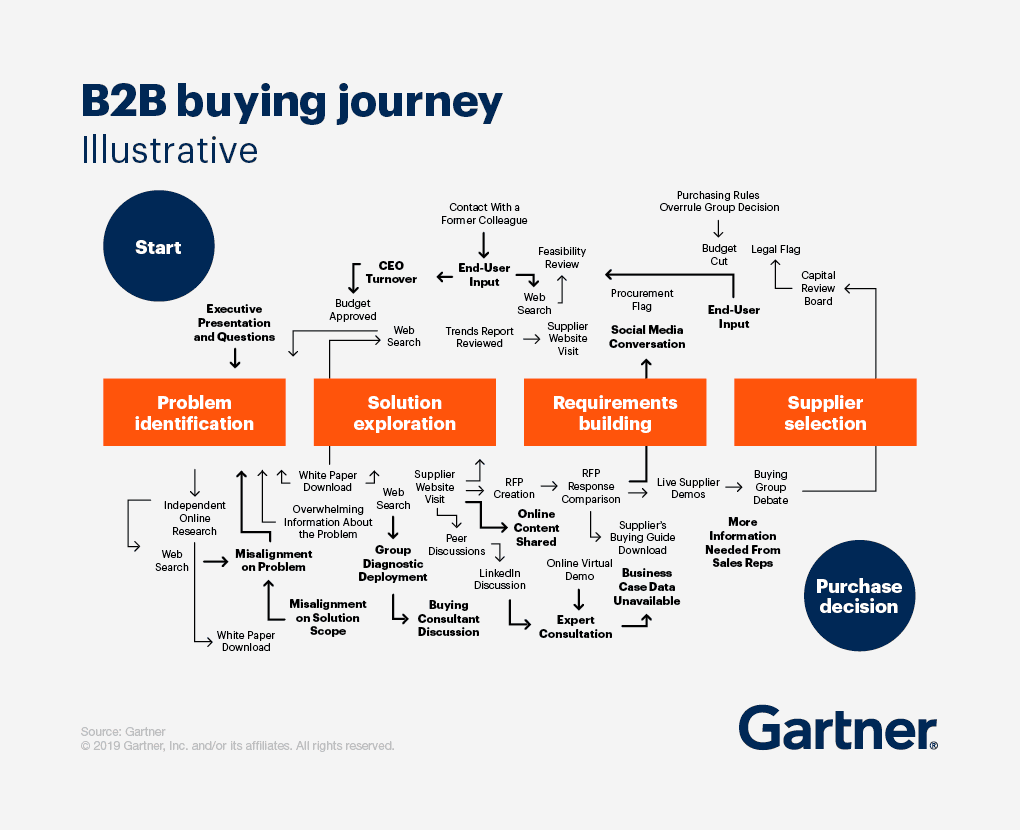
So, how should your website’s design should be customized to suit the different stages of the modern-day B2B buying journey? If you’re unsure how business buying journeys differ from consumer ones, reviewing b2b vs b2c website design can clarify the expectations at each stage.
Here we discuss the different B2B buying stages and how to optimize your web design for every stage:
Problem Identification
What It Is:
This is the stage where buyers become aware of a problem/opportunity. They’re reading articles, searching through social media posts, and talking to colleagues about solving a specific business problem.
How to Optimize Your Web Design:
Availability of high-quality information on multiple digital channels is the key to influencing customer decisions in this stage. To do that, you need to:
- Make your web design SEO-friendly.
- Create engaging content that your target buyers may use during their research.
- Make sure the website’s design is consistent with your brand colors and style across all pages.
- Your B2B website’s home page should be easy to scan; make it easy for potential buyers to find information regarding your products, services, etc.
- The website should have a clear hierarchy; users should be able to easily browse through product pages, blogs, contact pages, etc.
Solution Exploration
What It Is:
In this stage, potential buyers start comparing products, services, etc., from different brands. They read reviews, talk to other buyers, & start engaging with vendors.
How to Optimize Your Web Design:
In this stage, there’s one set of webpages that can turbocharge your lead generation ambitions: product pages. Make sure your product pages are:
- Easy to scan, including the home page
- All pages must feature clear headers and short descriptions
- The design style should be consistent across all pages
- Feature answers to the queries of prospective clients’
- Details all the things your company has to offer
- Key features/elements of your product
- Must consist clear calls to action
The design foundation of all the product pages should be consistent. The use of images, infographics, and other data visualization tools for highlighting your company’s special features is highly recommended.
Requirements Building
What It Is:
Here we see B2B buyers beginning to engage with vendors to obtain more info about their products/services.
How to Optimize Your Web Design:
At this stage, multiple decision makers get involved in the buying process. Leaving a good impression on all buying groups through effective web design is the goal of this stage:
- A/B test all key web design elements, including: all call-to-action phrases, buttons, page colors, and placements of product-related text and images.
- The website header should feature your brand name and a simple explanation of your brand’s long-term vision.
- Include product-related statistics, sales figures, and other visually-appealing infographics on each product page
- Leave plenty of white space around key action buttons to make them stand out
- Use super-clear language to create the headers or titles for each product/service page
Supplier Selection
What It Is:
Here, buyers narrow-down their options, conduct trials, request for demos, and contact sales representatives via the website.
How to Optimize Your Web Design:
In this stage, the buyer will be requesting offer trials and demos. Hence, the checkout pages should feature clear, concise, and easy-to-understand instructions:
- Encryption and other security features should be clearly mentioned on all checkout pages.
- Multiple payment options should be presented in an easy-to-understand way.
- Clear CTAs that encourage potential buyers to conclude
- Autofill options and user-friendly navigation on all checkout pages
- Mobile-responsive design
- Advanced search and filtering options to help buyers scan through key product information Links to webpages featuring upsells and cross-sells
Three key elements in these web design strategies are present through all the stages of the B2B buying journey: design consistency, easily scannable homepages, and the use of well-defined CTAs.
Here are some examples of top B2B companies correctly using these design elements:
A Consistent Design & Narrative:
Can the design of a website about envelopes ever be exciting? If it’s Blake Envelopes, then yes. Every page on this envelope seller’s website has a vibrant and jolly feel.
The use of colorful imagery and high-definition images of their products makes passive products like envelopes feel active.
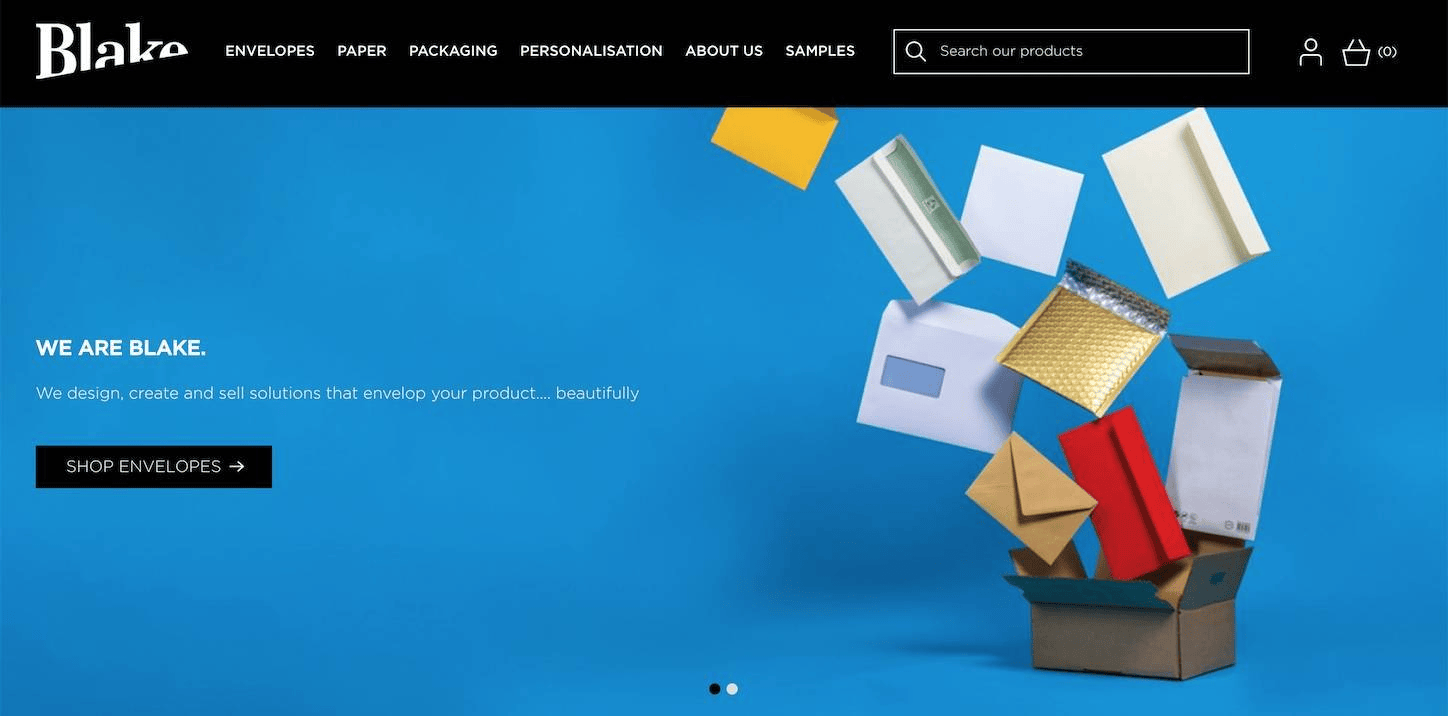
A Scannable Homepage:
In the first two stages of the B2B buying process, your homepage will be vital for pulling potential customers in. Communicating your brand’s key message should be the main aim of your web design strategy at this stage.
That means creating an easy to read, easy to scan home page with clear and concise content.
Clear CTA:
Designing eye-catching CTAs is a must on all pages of a B2B website. CTAs should be concise, placed strategically on all web pages, and visually distinct from other buttons or options. Always A/B test your CTA phrases, button colors, and other details.
B2B seller Miro offers an excellent example of how to design eye-catching CTAs:
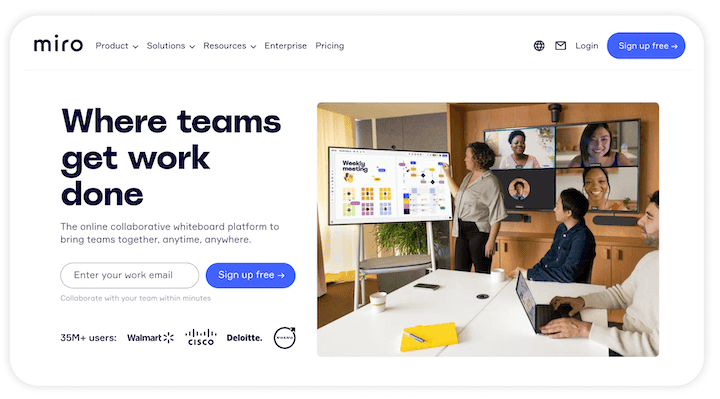
As you can see, the CTAs feature simple language: “Enter your work email” and “Sign up free.” The strategic use of white space makes the CTA button stand out.
2. Structured Website Layouts for Better B2B UX
Now that we’ve reviewed how the top B2B design companies are designing their homepages, let’s understand how they’re funneling their audiences to the next step in the buying cycle. The current trend is to use well-defined navigational elements.
For example, B2B company DXC Technology’s website features an intuitive navigation bar. From this bar, different tabs such as the “services” tab can be easily accessed by first-time visitors:
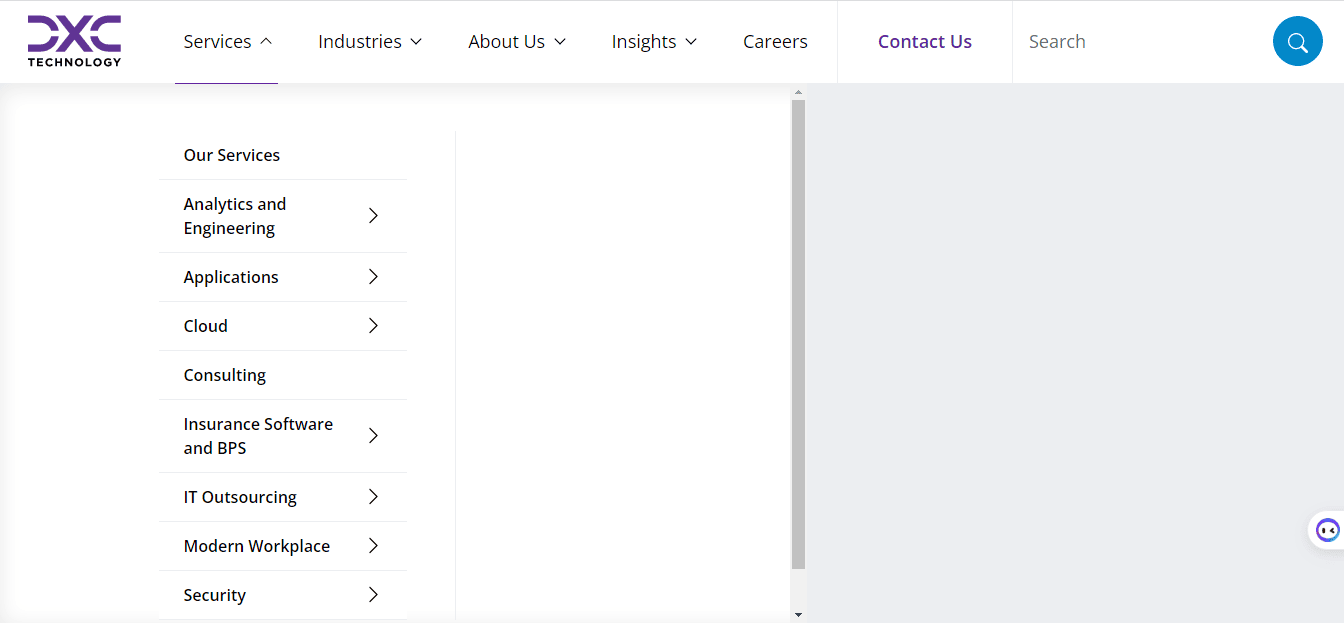
Every service provided by DXC technology has been clearly outlined in the navigation bar. Visitors can get a clear understanding of what the site has to offer them moments after opening the homepage.
In addition to segmenting the homepage, each service page should also be segmented and made easy to explore. This infographic from Orbit Media offers a simple yet effective way of segmenting B2B service pages:
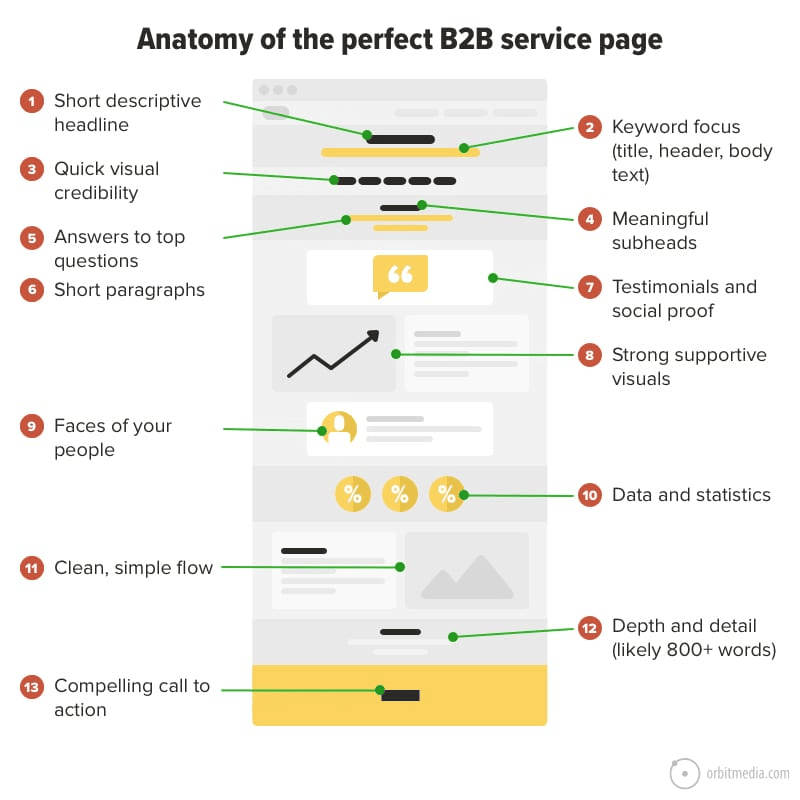
Specifically, your overall digital experience should make it easy for your customers to find the information they need and identify the answers to their questions.
Create a clear and cohesive design across your website and other digital touchpoints, like your social media accounts or your email newsletters. It is important to remember, however, that designing a page isn’t a one-size-fits-all remedy.
3. Responsive and Adaptive Web Design for B2B Brands
Google has been using mobile-first indexing since 2021. That means any B2B website that wants to rank higher must have a responsive design. Here’s what the eCommerce brand Shopify’s website looks like on a desktop and a mobile phone:
As you can see, the same web page has been adapted to fit on the two screens. B2B websites that don’t take the “mobile-first” approach in 2026 are guaranteed to lose out on a lot of traffic.
If your B2B brand has an app, make sure your responsive web design resembles your app design. Design consistency across all digital touchpoints helps build brand identity.
A unified look and feel between your website and app provide a seamless experience, ensuring that users can easily navigate and engage with your brand.
Working with a responsive website design agency can help maintain this consistency by aligning your web and app designs, ensuring both deliver a cohesive and professional user experience across all platforms.
4. Using High Quality Visuals
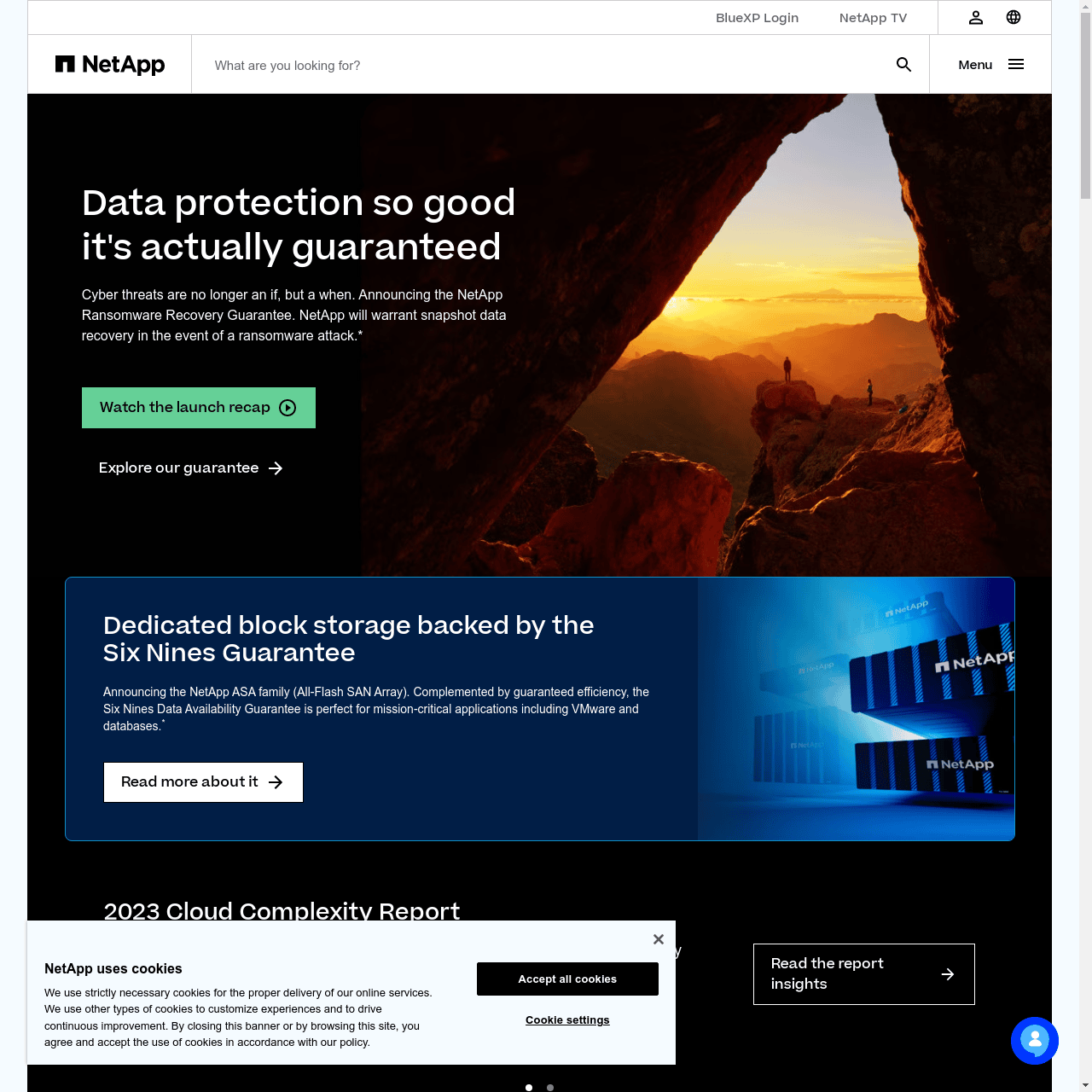
Effective design is all about cool visuals. In 2026, many B2B web designers are using high-definition images to create strong impressions on their target audiences.
The homepage of NetApp, a popular cloud service provider, serves as the perfect example of how to integrate high-definition images into B2B websites:
5. Minimalism is Still Better Than Maximalist
Many B2B website designers get tempted to hit their visitors with everything they can think of. Images, infographics, videos, and more. Don’t make that mistake in 2026.
Minimalist web designs are still far superior to their maximalist counterparts.
The homepage of wine-seller VineBox serves as a good example of how minimalism still rocks in 2026:
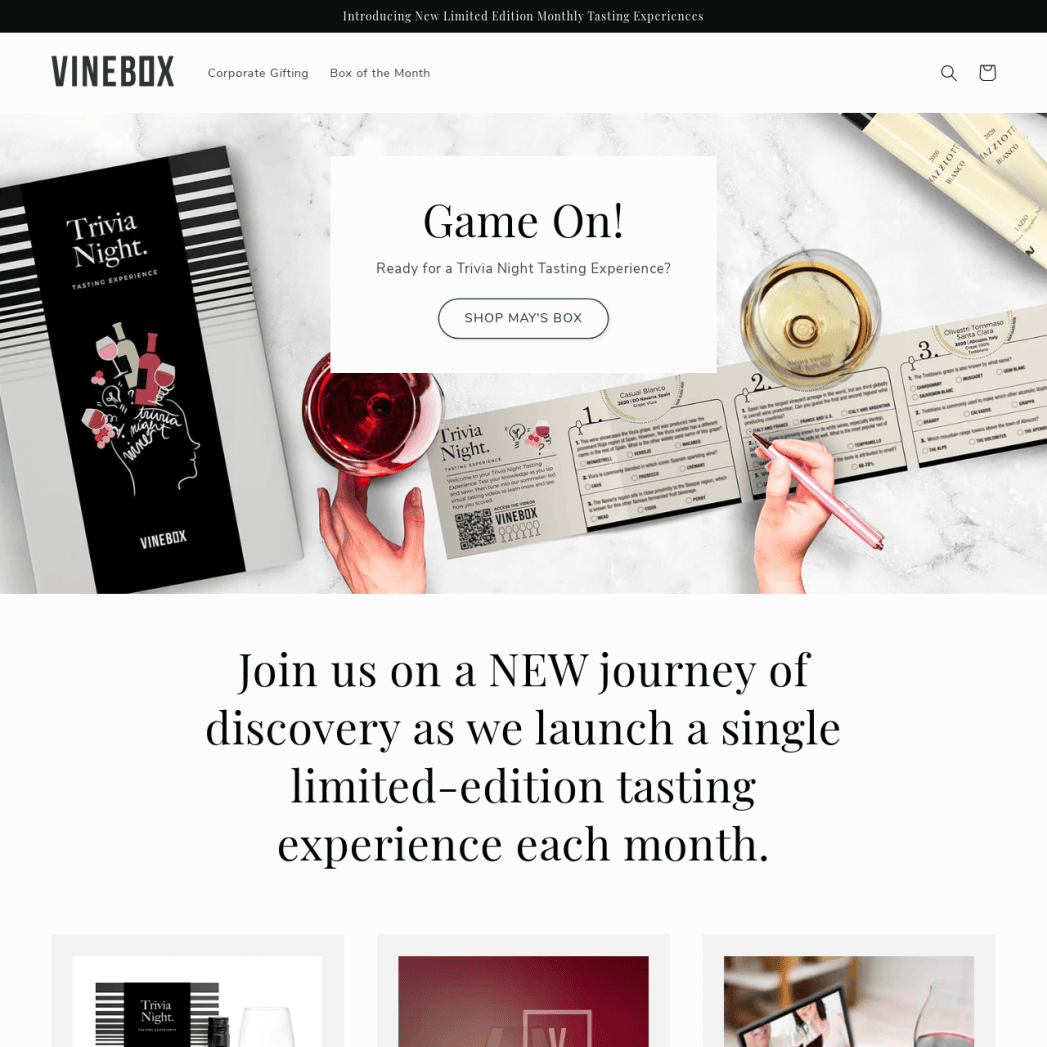
Just a few words of copy and an eye-catching CTA are enough to make this B2B website stand out. Plus, the fewer elements you add to your B2B website’s home page, the quicker it will load.
Another example of a minimalistic approach to design is using glassmorphism. However, before implementing it into your design, you should first understand what is glassmorphism?
This design trend uses translucent layers, subtle shadows, and smooth borders to create a modern and clean look that can enhance the user experience without overwhelming the interface.
6. Add Interactive Web Design Elements
To increase the number of time visitors spend on your B2B website, you need to give them a variety of interactive design elements. This can be clickable content, engaging media files, or any other type of interactive design element.
Hewlett Packard Enterprise’s homepage is a fine example of how interactive elements can make a normal B2B website appear super-engaging:
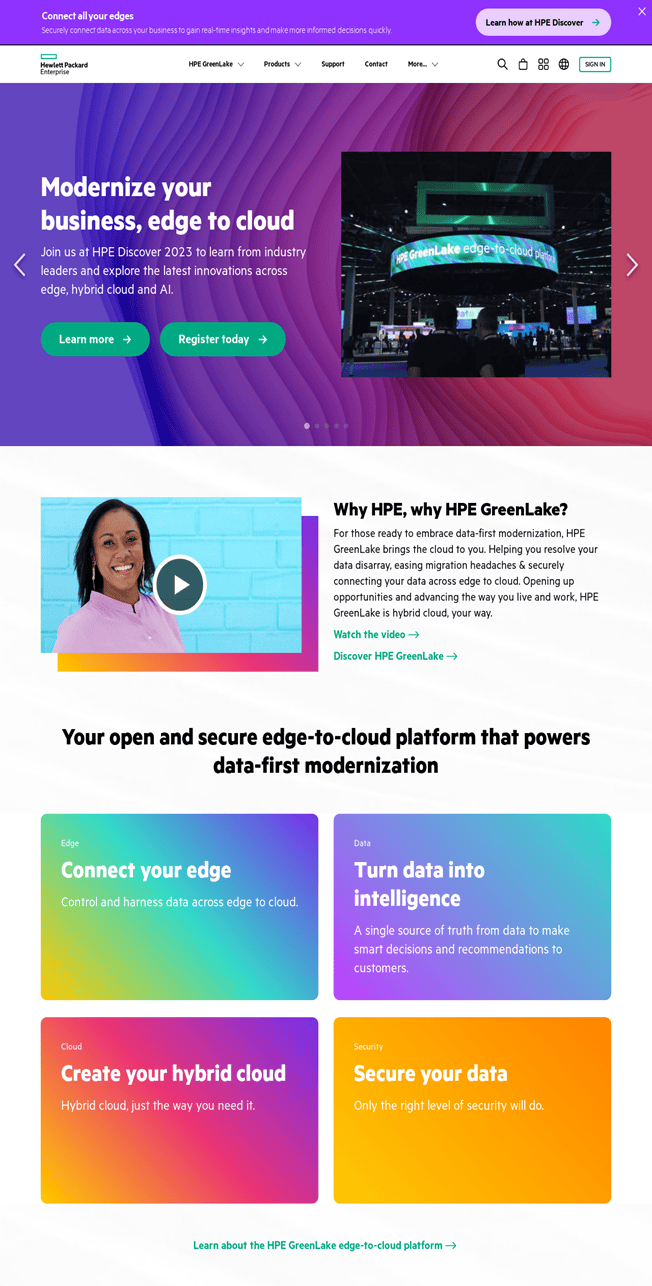
There are at least 12 interactive design elements on this homepage. Notice how none of them are cluttered. The strategic use of headers, images, bullet points, etc., has made the design feel super-interactive, yet very easy to explore.
7. Data Visualizations
Data visualization has been a popular tool in the website design industry for several years. It’s now growing popular in the B2B web design industry as marketers and sales professionals look to impress their target customers as quickly as possible.
By presenting important brand-related statistics in eye-catching graphics, you can increase your chances of catching people’s attention.
Take AV supplier, Integrated Illumination’s home page as an example:
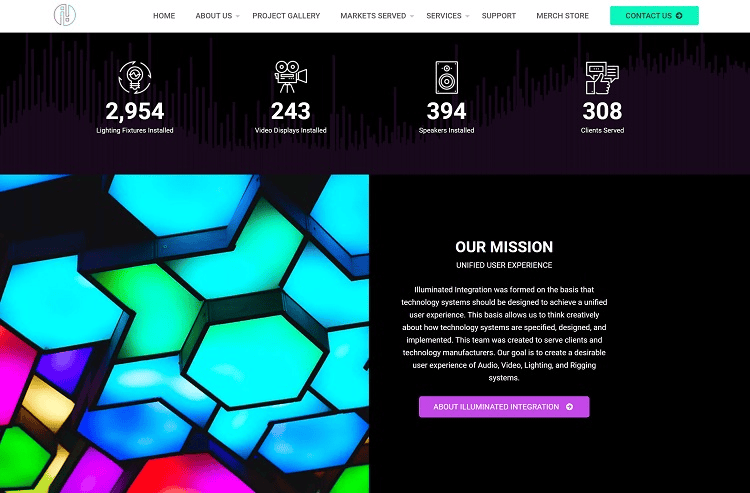
As you can see, the data presented via easy-to-understand graphics perfectly narrates the company’s story and explains key aspects of its services.
These are the top seven trends dominating the world of B2B web design in 2026. Is your B2B brand’s website up-to-date with these trends?
If not, use this guide to start the transformation! Explore insights from experts in B2B web design to start aligning your website with the latest industry standards. Use this guide to ensure your online presence stays competitive and engaging.
8. AI-Ready Content & Decision-Support Design
AI-supported content and decision-support design focus on structuring information for both users and AI systems. Instead of long, unstructured pages, content is organized into clear sections that help buyers compare options, validate decisions, and move forward with confidence.
The design supports how people actually research in B2B: by scanning, revisiting, and sharing information across teams.
How to optimize your web design using AI-supported content
- Make key information easy to surface for AI search, chat, and recommendations
- Structure content around buyer intent, not just page hierarchy
- Use clear headings, summaries, and modular sections to support scanning
- Present features, benefits, and outcomes in comparison-friendly layouts
- Add contextual CTAs that align with research and decision stages
Why B2B Web Design Matters in 2026
A B2B website is the first interaction point between the brand and customer, so it needs to be on-brand.
Now, buyers are quiet researchers who will compare products and expect a friction-free experience. A generic website cannot impress these well-educated customers.
Here are some markers of effective B2B web design:
- Help brands create first impression among customers
- Offers clarity and simplifies complex buying journeys
- Will host case studies and use cases to show results and build trust
- Supports long buyer journeys by stating the value proposition early
As buying decisions continue to shift online, B2B web design in 2026 is less about visual trends and more about how clearly a business shows up for its buyers.
The strongest websites will be those that respect attention, explain complex offerings with simplicity, and support real decision-making.
Conclusion
Staying ahead in the B2B space means continuously adapting to evolving design trends that prioritize usability, trust, and conversion. From clean layouts to AI driven personalization, each trend plays a role in shaping a stronger digital presence.
If you’re ready to put these ideas into action, check out our professional website design solutions or explore how our custom B2B design can help you stand out in a competitive market.