


Top 14 Design Strategy Services Firms To Hire in 2026



from our UX Strategy Guide

Design strategy firms employ business strategy, design thinking, and a human-centric UX design to create user stunning and innovative experiences.
Who Is This Guide For: Enterprise CEOs, Product Managers
What You Will Learn: The best design strategy firms, ranking methodology, product development roadmap, engagement models, and mistakes to avoid.
How We Ranked Firms: Online research, interviews, and thought leadership articles
Overview of Top 14 Design Strategy Consulting Firms in 2026
Here is a brief glimpse of the top design strategy firms of 2026
| Firms | Notable Outcomes | Focus |
| Design Studio UIUX | B2B SaaS | SaaS, Enterprise, eCommerce |
| IDEO | Human-centered innovation | SaaS, Enterprise |
| Pentagram | Brand strategy & design systems | Enterprise |
| R/GA | Tailored digital solutions | Enterprise/ eCommerce |
| Adam Fard Studio | SaaS onboarding | SaaS |
| UX Studio | Efficient product development | SaaS/ eCommerce |
| Fuzzy Math | Enterprise UX transformation | Enterprise/ SaaS |
| Momentum Design Lab | Higher usability in data-heavy applications | Enterprise/ SaaS |
| Work & Co | High-impact digital products | Enterprise/ eCommerce |
| ProCreator | Scalable UX Systems | SaaS/ eCommerce |
| Lollypop Design Studio | Enterprise digital transformation | SaaS/ eCommerce |
| Frog Design | Product innovation | Enterprise/ SaaS |
| Think Design | Research-backed UX transformation | Enterprise |
| Clay Global | High-maturity SaaS interfaces | SaaS |
What Are Design Strategy Firms & What Do They Really Do?
Design strategy firms provide consultation services to organizations on what to develop, why it should be developed, and how the product aligns with their business objectives and values.
Their core competencies consists of:
- User research
- Behavioral research
- Experience design
- Business Strategy
- Product & Service Design
What Are the Business Outcomes of Hiring A Design Strategy Firm
Product Market Fit
Startups often fail to gauge market demand and create products that don’t match the product market fit. A design strategy firm can prevent this by:
- Validating market demand and trends
- Doing SWOT analysis to understand pain points and opportunities
- Validating assumptions through user-research and market research
- Prioritize features based on ROI
Higher Conversion Rates
These agencies research how users think, what makes them accept or reject a product, and how they move through it. They remove the friction points from the interface, and upgrade the IA. People will stick more when they experience less friction, which leads to higher conversion rates.
Higher Customer Retention
Design strategy consultants combine human psychology, behavioral research, and market research for designing products. They use micro-interactions, and feedback loops to improve user experience, and streamline broken/ redundant processes.
More Confidence In Decisions
Service design firms offer clarity about features and assist in moving the needle. They employ structured frameworks like RICE, JTBD, and Opportunity mapping to convert insights from collected data into actionable items. They provide direction to stakeholders and reduce misalignment and re-engineering.
Detailed Breakdown of Top Design Strategy Firms
Design Studio UI/UX
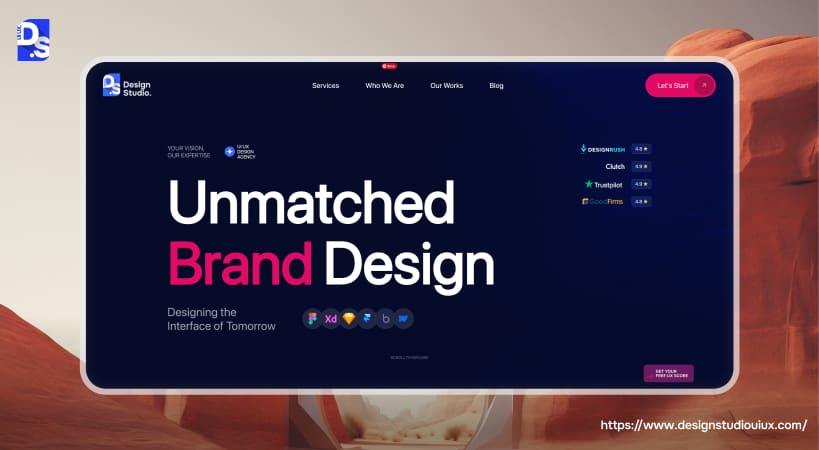
Design Studio UI/UX is specialized in creating original, user-centric designs that merge storytelling with functionality to create an exemplary user experience. Their core strength lies in:
- Mapping product goals
- Mapping measurable UX results with product goals
Instead of jumping straight into UI UX development, they have a structured discovery, strategy, and validation process. The process begins with product discovery, user research, UX research, prototype testing, and experimentation backlog
Idea client: Early-stage B2B SaaS companies, B2C, product-led growth teams
Pricing models: Fixed price, hourly rate, and dedicated team model
Why DesignStudio is on this list: Strong B2B expertise, ROI-driven case studies, structured design strategy process
Book a free consultation to learn how Design Studio UI/UX will bring your ideas into reality.
IDEO
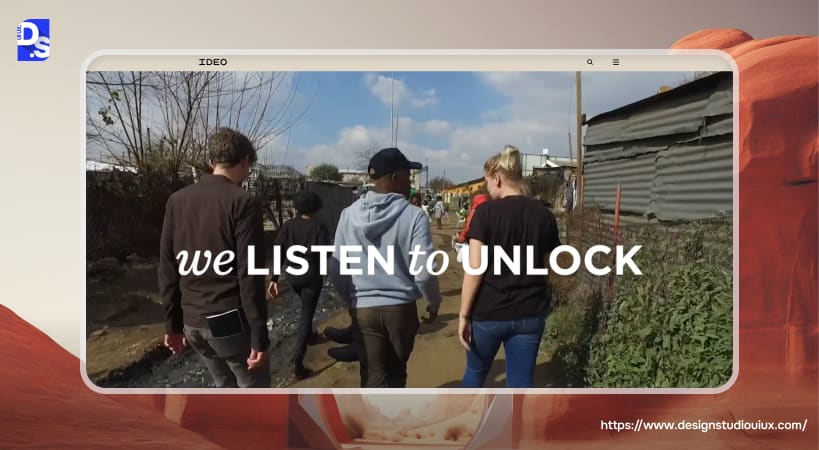
IDEO is a leading strategic design consultancy known for their design thinking and human-centered product design strategy. The organization is known for bringing unique perspectives, future-oriented thinking while building strategy.
Their services include building breakthrough products, planning design strategies, and creating business solutions. The team has ethnographers, strategists, designers, and developers working on the new opportunities.
They focus on building future-driven future-state experiences, innovative roadmaps, and service ecosystems. Their engagement model often consists of field research, creation labs, rapid experimentation, and long-term strategy artifacts.
IDEO is reputed to define category-based product development and rethinking and reframing assumptions.
Ideal Client: Startups, technology, healthcare, finance, and education organizations
Pricing model: Undisclosed
Why is IDEO on this list: Strong brand presence and reputed for bringing innovative UI/ UX ideas.
Pentagram
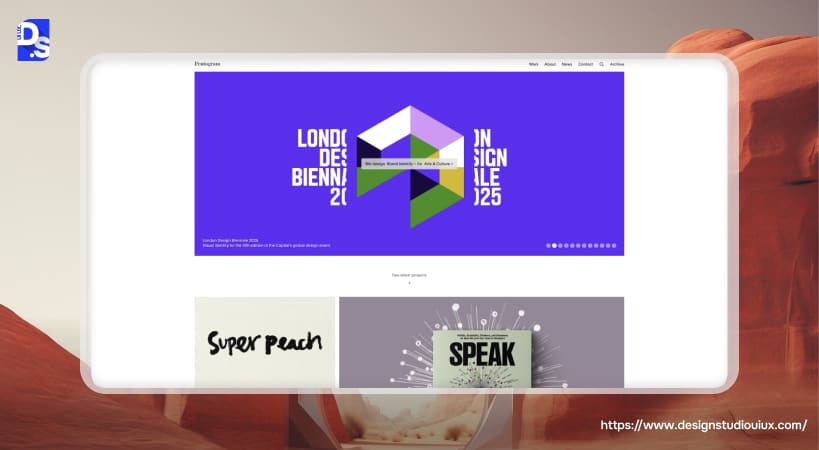
Pentagram positions itself as an multidisciplinary, independent strategic branding & experience design studio. Their strength lies in graphics, strategy and positioning, packaging, website and digital experience, typefaces, advertising and data visualization. Their work is about the intersection of branding, design language, and product experience.
Using competitive positioning, stakeholder vision, UX research, and UI behavioral studies to build unified UX frameworks. Pentagram works best for brands that work across multiple channels.
Ideal Client: Major global organizations across cultural institutions, fintech platforms, global retailers, and media companies.
Engagement models: Fixed price model
Why is Pentagram on this list: Pentagram stands out for their unique campaign experience for international clients.
Frog Design
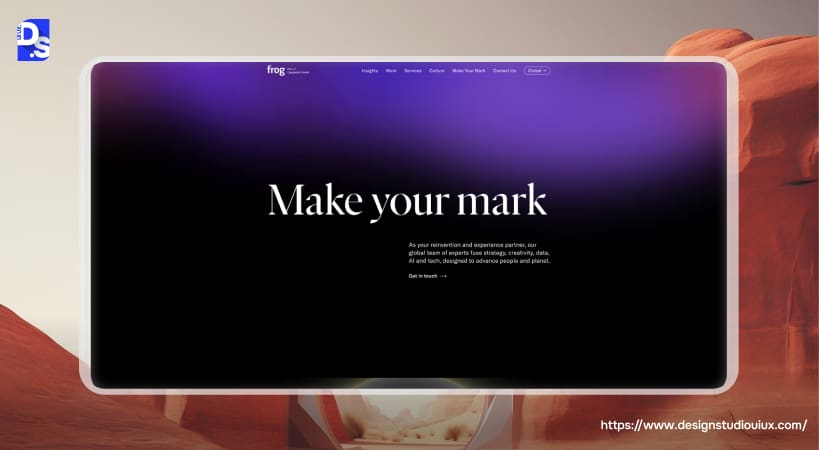
Frog Design is a multinational design studio focusing mainly on enterprise transformation, service design, and developing technology experiences. One of their core competencies include rethinking multi-stakeholders challenges, from redesigning healthcare ecosystems to financial platform experience to next-gen automotive UX environments.
They use their business and technical strategy to create a consistent and cohesive blueprint. They don’t just create the documentation, they help their clients visualize how the experience, platform, or environment will look in the future. Their consistent innovation and efforts led to new product concepts, categories, or ecosystems to drive digital transformation.
Ideal Client: Enterprises, scale-ups, tech companies
Engagement models: Undisclosed
Why is on this list: Frog Design champions user-centric design and combining technology with visual inspiration.
R/GA
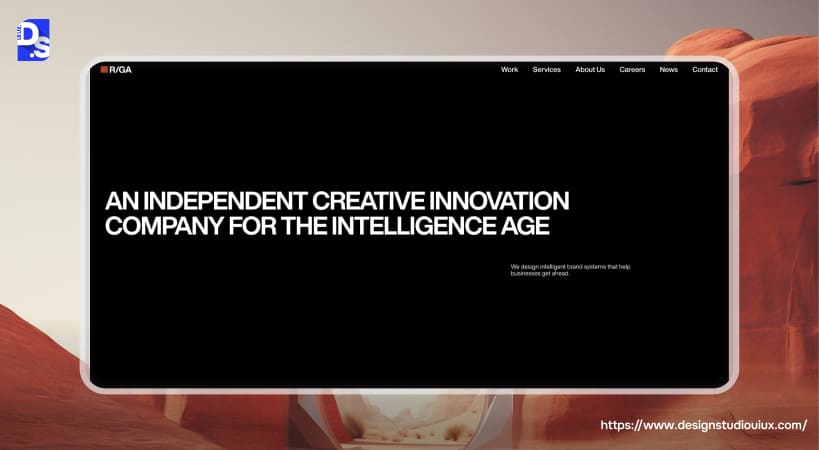
R/GA is a pioneer in digital transformation, reinventing experience strategy, business ventures, and connected ecosystems to provide a consistent and valuable user experience. Their expertise works on restructuring and optimizing experience design and brand loyalty. R/GA squad consists of strategists, data teams, and designers working consistently to bring strategy-based product ideas and clarity.
R/GA mainly works with high-level concepts, and turn them into scalable and practical digital systems.
Ideal Client: Advertising, IT companies, business services, funded startups (Series B), large enterprises
Engagement models: $100-$149/ hr
Why is on this list: R/GA is popular for reaching digital transformation of legacy systems, business units on a global level.
Adam Fard Studio
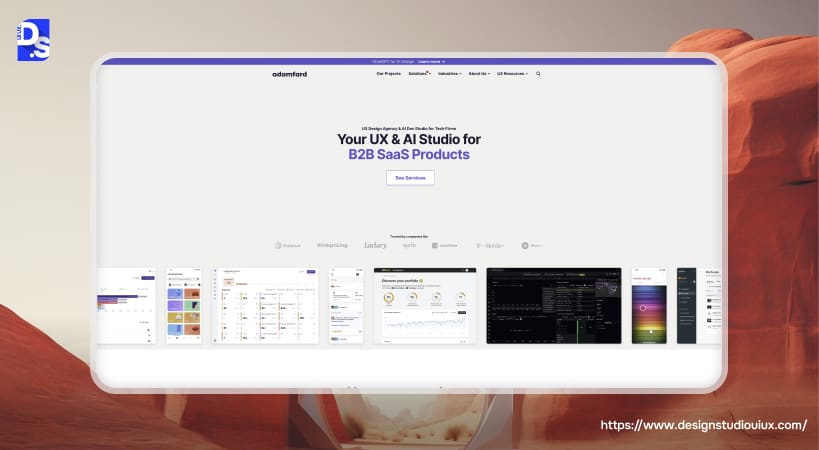
Adam Fard Studio specializes in UX and product strategy for SaaS, and weaves critical ROI metrics into the experience. The team’s focus is on detailed UX audits, TBD research, funnel analysis, and UX strategy roadmaps.
The design process involves simplifying onboarding, dashboards, information architecture, permissions, and workflow complexity. Their hidden talent involves diagnosing friction points that others might overlook, making them an ideal long-term business strategy partner.
Ideal Client: Fintech, eCommerce, AI, and SaaS
Engagement models: Hourly rate ($4-100/ hr)
Why is on this list: High success rate of aligning KPIs and business goals with user experience principles.
UX Studio
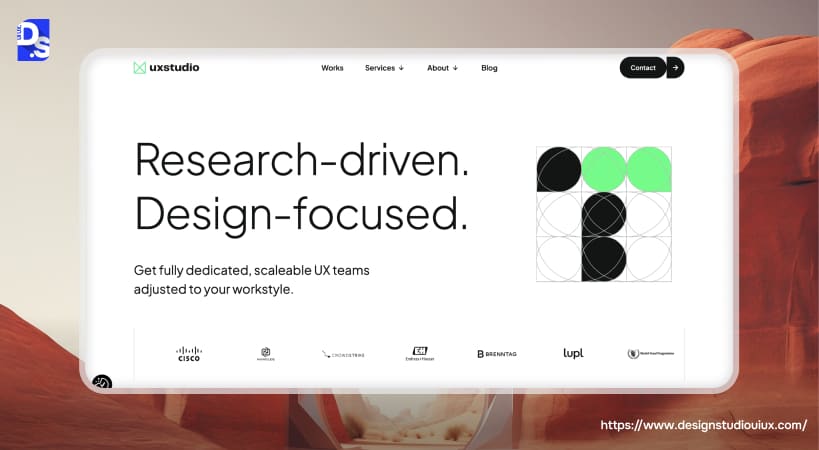
UXStudio is famous for offering UX research, UX development, and product strategy agency for SaaS and mobile products. The brand prides itself on conducting deep discovery, usability and product visualization and validation. If there’s an uncertainty about user needs, UX Studio is the best option for understanding product-market fit or pivots.
The brand emphasizes consistent UX research, monthly testing cycles, ongoing insights, and consistent product refinement. Their processes involve mixed-method research, opportunity mapping, and iterative prototyping.
Ideal Client: : Technology brands, global-scale organizations
Engagement models: Flexible partnership and retainer models
Why is on this list: Popular for simplifying UX development by merging deep research and smart design.
Fuzzy Math
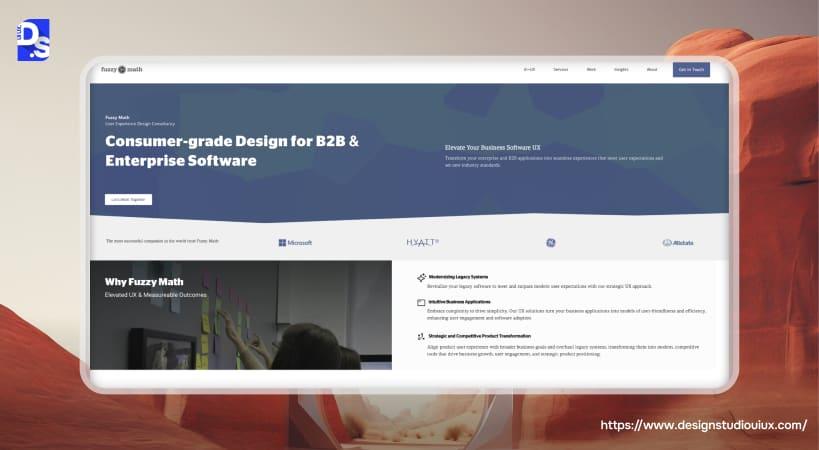
Fuzzy Math has made its name for empathetic and strategic UX for complex systems. The team has experience in dealing with business needs (covert and overt). The strategies they provide revolve around service design, workflow mapping, and critical systems with real-time consequences.
For complex systems, they have experience with offering product discovery services, design languages, and cross-platform covering fragmentation without any issues.
The team is strong at designing experiences for users with specialized domain knowledge, clinicians, analysts, financial teams, operations staff, etc. who understand cross-platform experiences. Recently, they have worked with a clinical team to present a documentation workflow to reduce manual steps and data accuracy.
Ideal Client: Healthcare, finance, logistics, non-profit, healthcare, and B2B recruitment companies
Engagement models: $150-199/ hr
Why is on this list: Famous for helping enterprises with their complex workflows
Momentum Design Lab
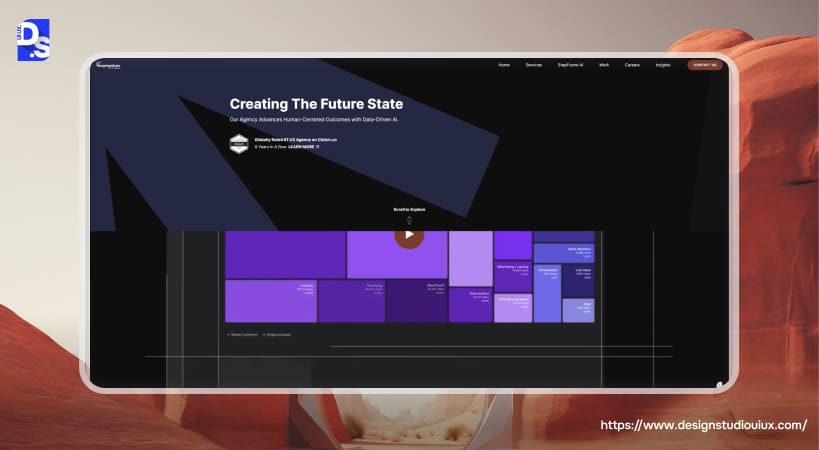
Momentum Labs combines pivotal product strategy and UX for SaaS, AI, and emerging tech, without abandoning human-centric customer experiences. They turn their expertise into valuable and usable product experiences.
For product-led growth design, they blend market analysis, UX audit, research, interaction design, and high-fidelity prototyping. With their expertise, they have developed complex AI dashboards, data analytics platforms, complex automation tools, and decision-support systems. This is a perfect partner for technical founders who want an innovative UX research partner.
Momentum’s team leans heavily into experimentation and early-stage prototyping, making them effective partners for innovation labs or technical founders wanting to validate new concepts quickly.
Ideal Client: Digital media management, crypto, wellness, AI, SaaS. and blockchain
Engagement models: $150-$199/ hr
Why is on this list: Momentum Design Lab is best for research-driven US design strategy, combining objectives and user needs.
Work & Co
Looking for a high-impact digital product strategy for global companies? Then Work & Co is the best option. The team, consisting of product strategists and designers who place emphasis on high-quality engineering, and combine it with senior-level business strategy.
They are focused on creating digital platforms, for commerce, mobile apps, enterprise tools, and public digital infrastructure. Work & Co operates on a senior delivery model, clarity, and driving meaningful user outcomes. They pair their expertise with real-world constraints, and validate their prototypes to avoid redesign and rework.
Their engagements emphasize clarity, fast iteration, and meaningful user outcomes. Strategy is tightly paired with real-world constraints, ensuring product ideas are validated through functional prototypes early.
Ideal Client: Enterprise teams, B2C and B2B organizations, and large firms
Engagement models: Undisclosed
Why is on this list: Work & Co has a clear framework for project prioritization, as stated by many companies
ProCreator
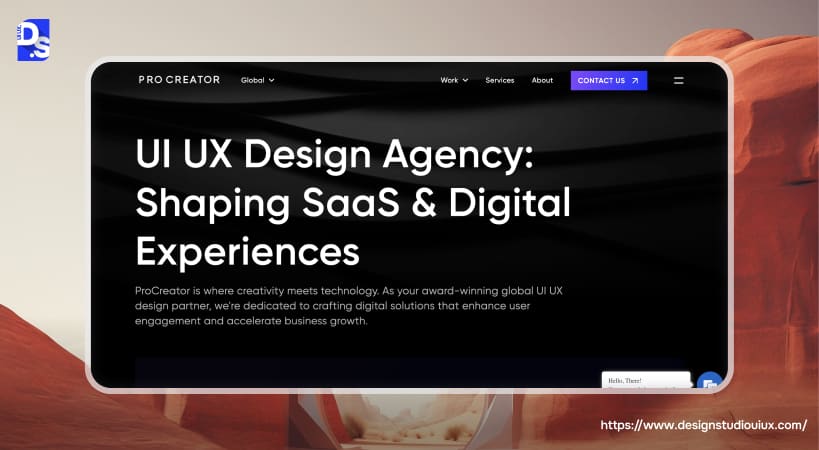
Businesses consider Procreator as the best UX and product strategy team. Procreator shines when projects require information architecture, compliance, and domain knowledge about managing domain-specific requirements.
Procreator has a strategic product development process, beginning with product analysis, research, UX strategy, and workflow design. When it comes to structuring dashboards that require further scaling.
Ideal Client: Large-scale Fintech and SaaS organizations
Engagement models: Undisclosed
Why Procreator is on the list: Skilled in creating and managing scalable, data-heavy workflows
Lollypop Design Studio
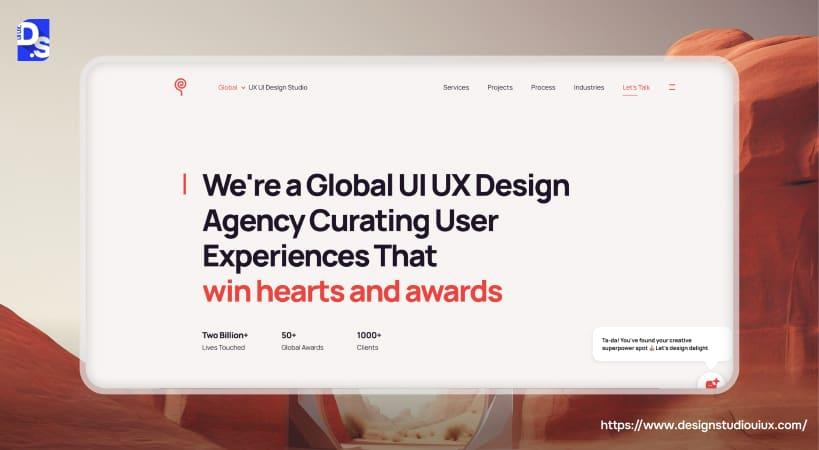
Lollypop is an experience strategy agency for enterprise and digital transformation comes handy for companies aiming for digital transformation. Their engagement process involves research and discovery, personas, journey mapping, design strategy, mobile/ web UX redesign, and visual systems.
Ideal Client: Large scale enterprises, public government agencies
Why is on this list: Known for creating UX to reduce task complexity through a clean interface.
Think Design
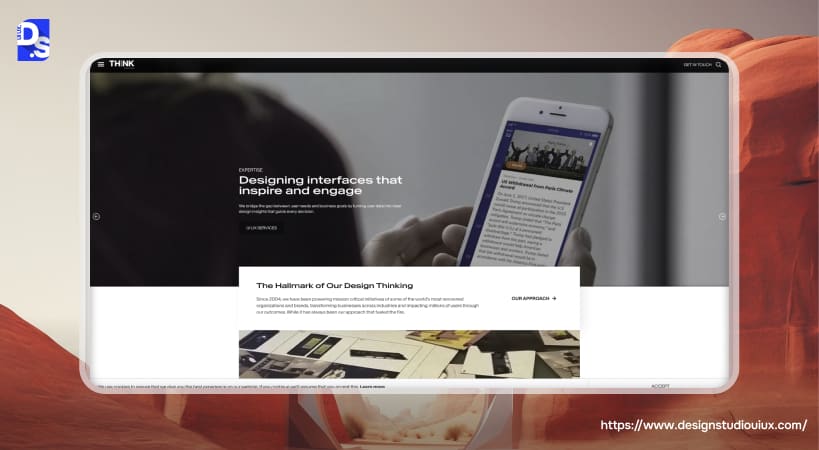
Think Design brings in-depth, contextual user research and strategy for clients. The team excel at understanding how to employ behavioral and cultural nuances and apply them to create a uniform UX experiment across mobile and websites.
Ideal Client: Education, healthcare, BFSI, and public services
Engagement models: Undisclosed
Why is on this list: Known for delivering projects with higher completion rates and reduce drop-offs.
Clay Global
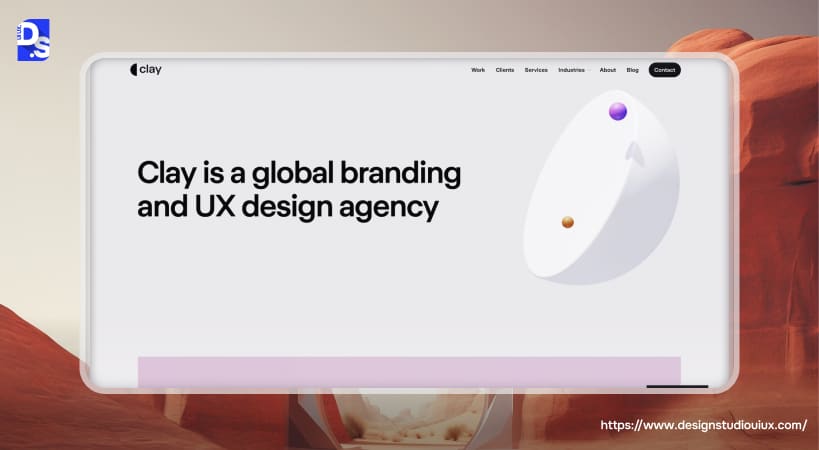
A premium SaaS-focused organization, Clay Global, that specializes in SaaS, crypto, and consumer electronics. The services revolve around product strategy + UX design studio with high design maturity.
The brand is known for delivering aesthetic designs that bring consumer engagement. Clay Global prides itself on serving projects with these three distinct markers: trust, clarity, and brand differentiation.
Ideal Client: Crypto, SaaS, electronics
Engagement models: Undisclosed
Why is on this list: Clay Global is the best choice for getting high-polish UX designs
Pricing & Engagement Models
The pricing of UI/UX projects depends on factors like project complexity, geographic location, vendor model (freelancer or agency), and of course, engagement models. Approximately, it might cost between $20,000 to $50,000+.
Usually, UX research companies work according to these models:
Fixed-Fee Projects
The best engagement model for teams looking for a clear scope, defined screens, or a specific initiative (app redesign, dashboard UX, product refresh).
Typical Deliverables:
User research, personas, journey maps, product strategy, UX flows, UI design, prototypes.
Estimated Pricing:
- Simple websites or small apps: $2,000–$15,000
- Mid-complexity SaaS or dashboards: $15,000–$35,000
- High-complexity, multi-role products: $35,000–$50,000+
Monthly Retainers
Ideal when the product roadmap is evolving, or when teams need continuous UX, research, or design strategy.
Estimation
- Lean support (40–60 hrs/month): $6,000–$12,000
- Product pod (80–120 hrs/month): $12,000–$25,000
- Full design team (160 hrs+): $25,000–$45,000+
Outcome-Based Pricing
Best for teams focusing on measurable results such as conversion lift, activation rate, onboarding completion, or funnel improvements.
Model options:
- Base fee + performance bonus
- % of conversion uplift
- % of revenue or MRR increase
How to Evaluate A Design Strategy Firm- 12 Questions to Ask
Hiring the wrong design strategy partner may result in misaligned efforts and failed product launches. Here is a 12-question checklist founders can use to evaluate these firms:
What does your discovery process look like?
This question is necessary, because discovery without research leads to assumption-based blueprinting.
Green flag: Field research, user interviews, analytics review, problem framing, opportunity mapping.
Red flag: “We start with wireframes.”
How do you identify user and business priorities?
Before signing a partnership, check how they align user and business priorities.
Green flag: Jobs-to-Be-Done, value mapping, segment-specific needs.
Red flag: “We design for everyone.”
How do you define and measure success?
Success means different across industries, and it should be based on strategy and KPIs, not opinions.
Green flag: Activation rates, onboarding completion, conversion, retention, task efficiency.
Red flag: “Success means the client likes it.”
Can you share case studies with outcome metrics, not just UI?
Visuals are great, but may not create the right impact, so always check the portfolio, beyond aesthetics.
Green flag: “We increased onboarding completion by 20%…”
Red flag: Pretty screens with no business results.
How do you validate ideas before investing in full design?
Before investing in full design, ask this question, because early validation is necessary to save time and budget.
Green flag: Prototypes, usability testing, concept tests, experiment backlog.
Red flag: “We only test after development.”
What frameworks do you use for prioritization?
These frameworks help teams to identify feature choices, backed by evidence.
Green flag: RICE, Kano, JTBD, opportunity scoring.
Red flag: “We rely on intuition.”
How do product managers and engineering teams stay involved?
The project is not dependent only on one team, so if there is collaboration between the teams, the task will suffer.
Green flag: Weekly rituals, feasibility reviews, aligned workflows.
Red flag: “We deliver, then you take it from there.”
How do you approach complex product flows or multi-role systems?
Green flag: Service blueprints, workflow mapping, permission logic thinking.
Red flag: “We’ll figure it out as we design.”
What deliverables do we get as part of UX strategy?
Green flag: Insights, journey map, information architecture, concept models, roadmap, experiments.
Red flag: “Wireframes are the strategy.”
How transparent is your estimation and timeline planning?
Green flag: Assumptions shared, dependencies logged, phases mapped.
Red flag: “We’ll tell you after design begins.”
How do you ensure handoff quality and implementation success?
Without proper handoff, this process would cause relentless back-and-forth communication.
Green flag: Annotated prototypes, design system tokens, dev syncs, QA checklists.
Red flag: “We just send Figma files.”
What happens after launch?
The strategy should not end with project completion, instead it should evolve as per evolving business requirements.
Green flag: Measurement plan, dashboards, iteration cycles, A/B testing roadmap.
Red flag: “Launch is the finish line.”
How We Have Selected These Design Strategy Firms?
We ranked these design strategy firms using an evidence-backed evaluation, case study research, and studying industry thought leadership.
Our ranking factors are based on expert interviews with product leaders and asking about their UX audit and research processes, and going through case studies, and thought-leadership articles.
We analyzed each firm’s ability to generate true insights:
- Mixed-method research capability
- Frameworks used (JTBD, behavioral models, service design)
We examined how each firm contributes to the industry through:
- Published articles, frameworks, and methodology breakdowns
- Case studies with detailed reasoning (not just visuals)
| Evaluation Factor | Weight |
| Research | 30% |
| Thought leadership | 20% |
| Case Study | 15% |
Roadmap To Working With A Design Strategy Firm
UI UX design process steps include goal alignment, discovery, strategy planning, prototyping, implementation, and measurement.
Goal Alignment
Week 1 sets the stage for the entire process, as teams align on business goals, key challenges, and market expectations. Without this, designers have to rely on assumptions, which is never a good sign:
- Kickoff workshops
- Stakeholder interviews
- Defining North Star metrics
- Understanding constraints
Discovery
The 2nd stage involves collecting information about user behavior, their motivations, and hidden opportunities. Processes involved in this step include:
- User research surveys
- UX research (journey mapping)
- Competitive benchmarking
- Persona analysis
- Task mapping
Time planning: Week 1-3
Strategy Planning
Once teams develop appropriate personas, it’s time to convert data into actionable design direction. Now, experts will work on these actions:
- Defining value proposition
- Experience principles
- Feature prioritization
- Service blueprint finalization
- Identifying the opportunities
- Planning IA
Timeline taken: Week 4-6
Prototyping
This phase involves creating prototypes to visualize the product and validate its flow, structure, and usability. Here the focus is given on:
- Low-fidelity wireframes
- High-fidelity prototypes
- Interaction and motion design
- Rapid usability testing
- Iterations based on feedback
Timeline taken: Week 7-8
Implementation
This step varies across design strategy companies, from design-only handoff or full implementation support.
What happens in this step:
- Final UI design
- Finalizing Design Systems
- QA
- Working with engineering teams
Timeline: Week 9-12
Measurement
In the final design strategy step, teams will monitor real-world performance and optimize the product for engagement.
- KPI tracking
- Behavioral analytics
- Funnel Analysis
- Design Improvements
Timeline: Week 12 onwards
Mistakes to Avoid When Hiring A Design Strategy Agency
Adopting A Visual-based Outlook
Going for organizations that lead with aesthetic UI designs, or a polished portfolio, without showing strategy.
Fix: Select companies that show their research, how they arrive at a strategy and measure outcomes, don’t just fall for aesthetics.
Not Understanding the Agency’s Methodology
Assuming every company follows the same methodology as your previous vendor, and not actually asking to define it should be avoided.
Fix: Ask vendors to explain their approach, the steps involved in the process, their Plan-B, what outcomes they are hoping to achieve, etc.
Not Doing Thorough Research
Jumping straight into the project, be it wireframing, or developing UI screens without researching, just to save time is not recommended.
Fix: Choose an organization that conducts rigorous research to avoid costly redesigns in the future.
Not Knowing The Exit Plans
Companies often forget to ask about exit strategy, like what happens after the project is delivered (lock-ins, handover, maintenance, and post-delivery support).
Fix: Raise questions about lock-ins, handover, asset management, and post-delivery support before assigning a project.
Not Checking For Industry-Specific Experience
A generalist agency might not have the specialized expertise required for your industry, be it SaaS, fintech UX design, or eCommerce.
Fix: Ask for case studies appropriate for your domain, business model, or complexity level.
Choosing low-cost agencies instead of the right partner
Businesses often fall into the cost trap, and choose an agency with a low-ball offer, leading to rushed product strategy execution and reworks.
Fix: Don’t be fixated on the price, rather focus on ROI. Go for agencies with a clear design strategy, and can show transparency for measurable outcomes.
Choosing By Vertical: SaaS vs eCommerce vs Enterprise
SaaS, eCommerce, and enterprise have different user behaviors, technical constraints, and KPIs, so not every design agency can match them. Here is a brief overview how things would look across these three verticals:
SaaS
A SaaS website design agency follows these steps to achieve product-led growth such as onboarding, activation, and retention. Your design strategy partner needs to understand complex workflows, subscription funnels, and continuous experimentation.
What matters in SaaS design strategy:
- Reducing friction in onboarding
- Increasing activation and time-to-value
- Simplifying complex dashboards or workflows
- Experimentation (A/B tests, prototypes, usability)
eCommerce
eCommerce website design services heavily boost conversion rate optimization (CRO), browsing behavior, purchase psychology, and post-purchase retention.
What matters in eCommerce design strategy:
- Search + filtering experience
- Product page clarity and persuasion
- Checkout simplification
- Personalization and recommendations
Enterprise
Enterprise products are often complex, multi-role, multi-permission, and mission-critical, which is why many organizations invest in a robust Enterprise design system to maintain consistency and scalability.
When defining what is enterprise UX, it becomes clear that these systems involve long decision cycles, data-dense screens, and integrations with legacy systems.
What matters in Enterprise web design strategy:
- Workflow mapping
- Role-based experiences (different users → different needs)
- Information architecture for large data sets
- Reducing cognitive load for specialist users
Conclusion
The right design strategy firm can determine whether your product becomes a category leader or falls into the cycle of constant rework, low adoption, and misalignment.
The firms featured in this guide, ranging from innovation pioneers like IDEO and Frog to SaaS-focused specialists like Design Studio UI/UX, Adam Fard Studio, and Clay Global, demonstrate how high-quality strategy goes far beyond UI.
These firms validate market demand, define product-market fit, prioritize features based on ROI, shape service ecosystems, and reduce friction across the entire user journey.
As you evaluate potential partners, prioritize transparency, methodology, domain expertise, and their ability to show outcome-driven case studies, not just beautiful visuals.
FAQs – Top Design Strategy Firms
What does a design strategy firm do?

A design strategy firm aligns product design with business goals using research, product strategy, prototyping, and measurement. They help companies improve conversion, retention, and user experience using structured discovery and strategic planning.
How do I choose the best design strategy firm for my product?
While choosing, look for relevant case studies, strong research capability, clear KPIs, and a structured discovery-to-measurement process. Domain expertise (SaaS, eCommerce, enterprise) is crucial.
How much do design strategy services cost?
The services typically cost $15k–$40k for startups, $40k–$120k for mid-market, and $120k–$250k+ for enterprise.
How long does it take to see results from a design strategy engagement?
Most companies begin seeing improvements in conversion or onboarding within 6–12 weeks after implementation.
What questions should I ask a design strategy firm during RFP?
As a business owner, you should ask these questions to design strategy firm during RFP:
- Research methods
- Prototyping process
- KPIs
- Domain expertise and case studies
Should startups hire a design strategy agency or build in-house?
Startups would benefit from agencies early because they get senior strategy talent immediately without hiring overhead.
What metrics prove a design strategy firm is delivering ROI?
These are the metrics one must look for in a design strategy firm:
- Conversion rate lifts,
- Onboarding completion improvements,
- Reduced churn,
- Faster time-to-first-value, and fewer support tickets.