


Healthcare UX Design Guide, Trends & Patient-Centric Tips



Summary
The healthcare UX design guide recommends making medical information clear and accessible by using simple layouts, readable content, and intuitive navigation to reduce stress and human error.
Healthcare user experience design refers to creating user-friendly digital health delivery services.
It involves making all digital healthcare products or services – from medical apps and websites to electronic health records and doctor appointment scheduling tools – more accessible, efficient, and user-friendly.
At its core, healthcare or medical UX design isn’t much different from UX design in other fields – it aims to generate maximum value for users.
The only major difference is that bad UX design in most fields leads to companies losing or disengaging their users. Bad healthcare UX design on the other hand can literally cost lives.
This guide discusses emerging healthcare UX trends of 2026, including patient-first design approaches and regulations will shape user behavior.
In this blog, we’ll take a deep dive into the critical field of healthcare UX. You’ll learn all about the major challenges, trends, and best practices in this field.
What Is Healthcare UX?
Healthcare UX design is the practice of designing digital healthcare experiences that prioritize patient safety, usability, accessibility, and clinical efficiency. The goal is to reduce medical errors and improve clinical efficiency through accessible and usable interfaces.
Top Healthcare UX Trends Shaping Patient Experience in 2026
Healthcare UX trends of 2026 will be driven by AI adoption, regulatory pressure, and the demand for user-centric design, especially in aging populations.
These are the key trends setting the stage for accessible and patient-centric interfaces:
- AI-Powered Chatbots
- Mental Health Tech
- Vocal Biomarkers
- Digital Therapeutics
- Voice User Interfaces (VUIs)
Despite these challenges, there is no dearth of innovation in the healthcare UX design space. In fact, the following trends are in direct response to some of the challenges listed above.
AI-Powered Chatbots
AI-powered chatbots like the ones offered by Ada Health enhance patient interactions by offering personalized experiences. They adapt communication styles based on user needs, using simple language for patients and detailed analytics for clinicians.
These chatbots automate secure, HIPAA-compliant data handling and reduce human error in sensitive tasks such as triage.
They also streamline administrative processes like appointment scheduling, allowing healthcare staff to focus on critical care.
Mental Health Tech
Apps like Calm and Better-Help are democratizing access to mental health care. For the first time, mental health support is reaching underserved populations, like in rural areas.
Vocal Biomarkers
Vocal biomarker technology from companies like Sonde Health can detects conditions like Parkinson’s disease through voice analysis. These types of innovation reduce reliance on multiple diagnostic tools.
Digital Therapeutics
Digital therapeutics like RelieVRx are transforming chronic pain management by combining immersive virtual reality experiences with therapeutic interventions. This trend allows for rapid software updates compared to traditional drug trials.
Voice User Interfaces (VUIs)
Voice user interfaces are gaining traction in healthcare apps. VUIs simplify navigation for elderly patients and enable hands-free interaction for users with disabilities.
Why Invest in Healthcare UX/UI Design in 2026?
Healthcare UX is more than a pretty interface; it can directly influence patient safety. A strategically designed interface can deliver clinical and operational efficiency.
This is especially important in large-scale enterprise website design projects where healthcare organizations manage complex patient ecosystems across multiple departments and digital platforms.
Here are some supporting facts:
- A well-designed healthcare UX help hospitals to reduce medical errors by 20%
- AI chatbots can resolve 80% of patient queries, freeing experts to deal with major incidents
- Healthcare organizations investing in UX will enjoy an ROI of 9,900%, being one of the the highest-impact sectors
These statistics imply one thing: healthcare UX design is a lever driving organizational growth and profitability.
When designed with clinical context and patient needs in mind, it improves safety, streamlines care delivery, and delivers outsized returns that few other healthcare investments can match.
Why Healthcare UX Matters?
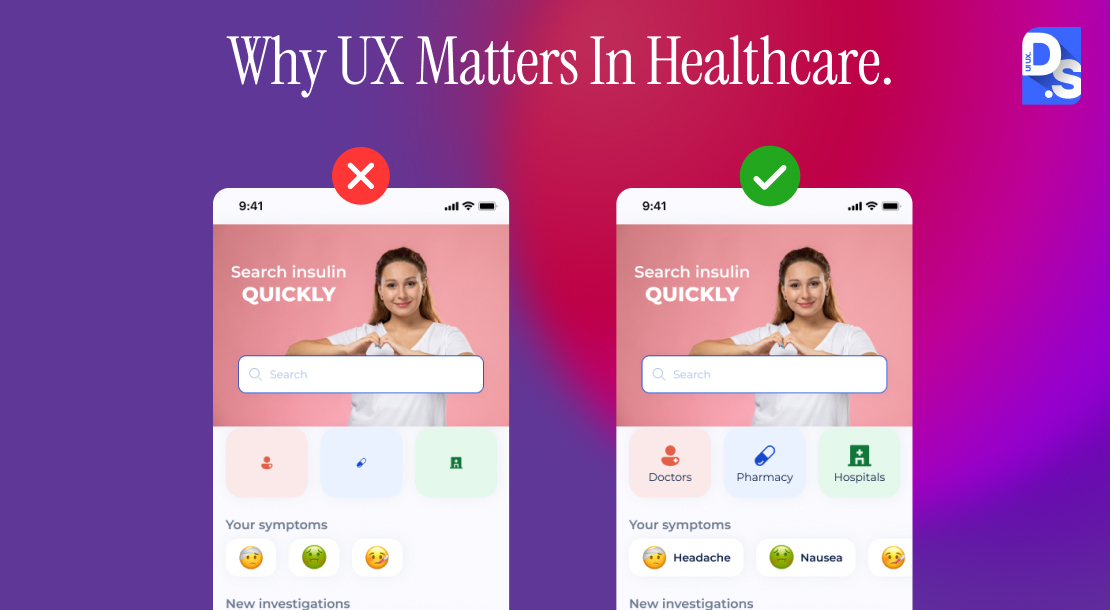
The need to digitize healthcare products/services and then use strategic UX design to make those tools more accessible, efficient, and user-friendly – has never been more urgent.
Here’s why:
i. UX for an Aging Population
By 2030, 1 in 6 people worldwide will be aged 60 or older. Not everyone in this demographic will have easy access to human doctors.
They’ll need easily accessible and easy-to-use medical tools for support. Efficient healthcare UX design has a huge role to play in providing them the support they need:
- Well-designed ‘smart’ tools with voice-activated interfaces can allow elderly arthritis patients to manage their environment (adjusting lights, temperature, etc.) without physically exerting themselves.
- Strategically designed medical apps with high-contrast visuals and text can enhance readability and make health information more accessible to older adults.
Thoughtful UX design can greatly enhance the autonomy of our aging population and reduce the burden on caregivers who assist seniors with technology.
ii. Untangling the Web of Chronic Conditions with UX Design
Patients with multiple chronic conditions frequently encounter fragmented care, leading to confusion and inefficiency.
Efficient healthcare UX design can act as a “health translator” by integrating disparate data sets into cohesive dashboards.
Imagine a diabetes management app that seamlessly syncs with cardiology reports and dietary plans. This type of design-driven data integration streamlines communication between healthcare providers and patients.
Leveraging data visualization UX best practices ensures that such dashboards not only present information clearly but also reduce cognitive load for both clinicians and patients.
It ensures that everyone involved has access to the same vital information.
Good UX design can help clarify treatment plans and improve overall care coordination by presenting unified views of patients’ health records.
iii. as Cost-Cutter
Inefficient electronic health record systems (EHRs) can cost healthcare facilities a ton of money. Intuitive UX design can significantly reduce these inefficiencies by simplifying workflows and minimizing errors.
Similar to the finance sector—where optimizing for usability, compliance, and security is non-negotiable—adopting the latest Fintech UX design trends provides a roadmap for applying scalable, user-centered solutions to complex industries like healthcare.
iv. Fighting Fatigue with UX
Nurse burnout is a major issue in healthcare. According to a recent survey from the National Council of State Boards of Nursing (NCSBN):
- 50.8% of the nurses surveyed feel emotionally drained on a daily/weekly basis.
- 49.7% experience severe fatigue on a daily/weekly basis.
- 45.1% feel burned out daily.
The use of nurse-prioritized alert systems with efficient UX design in ICUs can help mitigate this strain.
These easy-to-use tools can allow nurses to focus on delivering targeted patient care instead of being overwhelmed by constant notifications.
The design of such tools often benefits from UX writing best practices that clarify alerts and reduce decision fatigue.
v. Clinicians as Co-Creators
A central aspect of professional UX design is conducting UX research. UX designers involve the end-users in the design process and use their input to refine the designs of digital tools.
To do this effectively, staying updated with ongoing UX research trends is essential, especially when co-creating solutions with clinicians. Such research-based UX design efforts can be very effective in the healthcare sector.
A study conducted at Mansoura University Hospital demonstrated that when nurses were involved in developing standards for patient handovers, it led to significant improvements in communication and efficiency.
The research highlighted how 77% of nurses expressed dissatisfaction with existing handover procedures. This dissatisfaction contributed to a 30% error rate during these critical transitions.
By involving nurses in the redesign process, designers were able to co-create a new handover tool. This redesigned tool emphasized clear communication and organized documentation.
This collaborative approach reduced the error rate considerably. It also fostered a sense of ownership among the nursing staff.
This illustrates that involving healthcare professionals in the design process transforms them from mere users into innovators.
By involving clinicians in design/redesign processes, organizations can create tools that genuinely address their challenges.
vi. Supporting Disabled Patients
UX design can make healthcare or general aid more accessible to patients with disabilities. For example, the Lazzus app uses sound cues to guide visually impaired patients through hospitals.
Such innovative tools with innovative UX designs promote greater equity in healthcare access.
Key Principles of Effective Healthcare UX
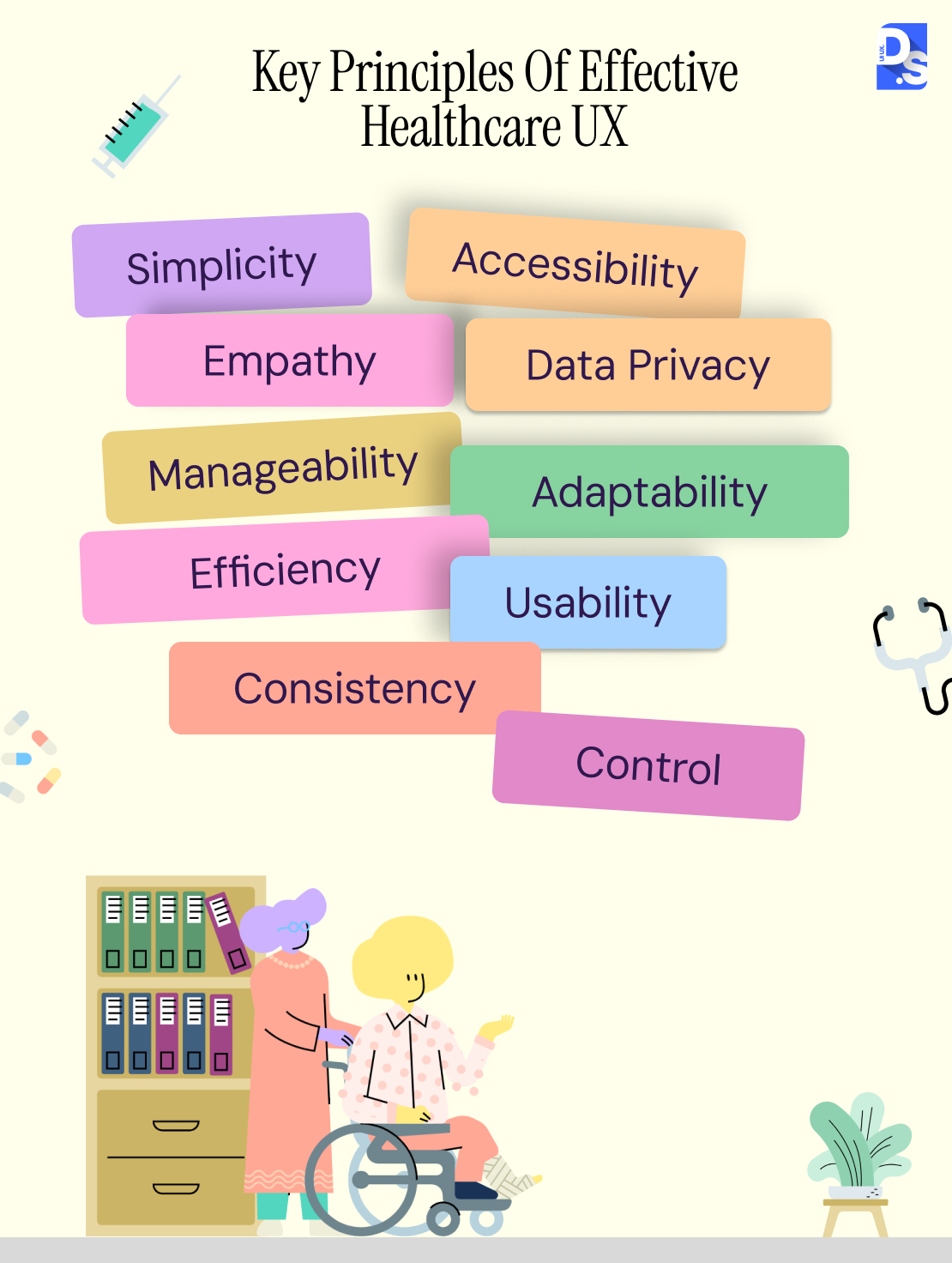
To effectively address the needs outlined above, healthcare and medical UX design professionals need to abide by the following principles.
i. Simplicity
Simplicity in healthcare UX means designing interfaces that are intuitive, easy to navigate and have clean layouts with fewer buttons and distractions.
If you are designing a diabetes management app, allow users to log their glucose levels with a single tap. By reducing complexity, designers can minimize errors, speed up processes, and improve user satisfaction.
ii. Accessibility
Accessibility in healthcare UX means making healthcare technology usable for everyone – including individuals with disabilities. It means making product designs compliant with the Americans with Disabilities Act (ADA) and Web Content Accessibility Guidelines (WCAG).
Following responsive web design best practices also plays a major role in ensuring accessibility across devices and user types.
For instance, if you are designing a touchscreen game for dementia patients, use large icons and audio cues to facilitate interaction.
Or, while designing websites for senior citizens, add features like high-contrast colors, screen-reader compatibility, and voice commands to the site.
iii. Empathy
Empathy involves understanding the genuine experiences and challenges faced by patients. This requires thorough user research with interviews or observational studies.
For example, children may respond better to gamified rehabilitation apps that make therapy enjoyable, while seniors might prefer straightforward interfaces with clear instructions.
By mapping these emotional journeys in advance, UX designers can create digital solutions that address specific user pain points and enhance the quality of care for everyone.
iv. Data Privacy
Patients are more likely to engage with digital health solutions when they feel confident that their personal data is protected. So, data privacy is a cornerstone of effective healthcare UX.
Compliance with regulations such as the Health Insurance Portability and Accountability Act (HIPAA) is non-negotiable for everyone in this field.
Sensitive patient information must always be securely stored and encrypted in digital health tools. Telehealth platforms like Amwell exemplify this principle by employing end-to-end encryption and clear consent prompts during consultations.
v. Manageability
Manageability refers to how easy it is for healthcare tools to be updated and integrated into existing systems. Effective UX design should ensure that software is user-friendly not only for end-users but also for medical staff.
For example, platforms that allow hospitals to quickly embed secure login systems without extensive IT resources can significantly reduce operational burdens.
vi. Adaptability
Adaptability refers to creating flexible systems capable of evolving with user requirements. For instance, a nurse scheduling app should be able to scale from managing 10 users to 1000 without performance issues.
vii. Efficiency
Efficiency focuses on aligning features with real-world workflows to eliminate unnecessary complications. If a feature does not contribute to saving time or improving health outcomes, it should be removed from the design.
viii. Usability
Usability ensures that users can easily learn how to navigate healthcare apps without extensive training.
For instance, a post-operative recovery app might use visual timelines to guide users through their recovery process without requiring manuals or tutorials. Conducting usability testing with end users can help UX designers identify usability obstacles.
ix. Consistency
Consistency in design helps users feel more comfortable while interacting with healthcare tools. This principle involves maintaining uniformity in layout, terminology, and functionality across all platforms and devices.
When users encounter familiar elements, such as similar button placements or color schemes, they can navigate more efficiently without needing to relearn the interface each time they switch devices.
x. Control
Control in healthcare UX means empowering users by providing them with clear options and feedback during interactions. This principle ensures that users can easily reverse actions or make adjustments without fear of making irreversible mistakes.
For instance, allowing patients to edit their health information or adjust appointment times in medical apps fosters a sense of ownership over their care process.
Case Studies: Healthcare UX Success Stories
If you think it is nearly impossible to infuse UX design principles like ‘simplicity’ or ‘manageability’ into the complex world of medical technology – think again.
In the past decade, we have seen many healthcare UX success stories that make us ultra-optimistic for the future:
Cancer Center Portal Redesign
A collaborative effort at a cancer center led to the creation of the Opal patient portal. This portal provides personalized information, appointment schedules, and educational materials tailored to individual health conditions.
Opal significantly improved patient engagement and satisfaction. The success of Opal is mainly attributed to its user-friendly design.
Epic MyChart Redesign
The MyChart patient portal by Epic Systems underwent a major redesign aimed at enhancing user experience. The new design focused on simplicity and personalization.
The redesign has resulted in increased transparency regarding appointment availability and improved patient engagement.
Well-Designed Appointment Scheduling Platform Reduces Wait Times
The Amwell telehealth platform provides a user-friendly interface for video consultations and encrypted messaging. It allows patients to conveniently interact with their healthcare providers.
This platform has drastically reduced wait times-related frustrations for Amwell’s patients.
Wearable Health Device Finds Major Success
The WHOOP Strap optimizes athletic performance through continuous heart rate monitoring. Its user-friendly UI offers real-time data analysis + personalized recommendations.
This emphasis on usability has made WHOOP a leading choice for fitness enthusiasts.
Challenges in Healthcare UX Design
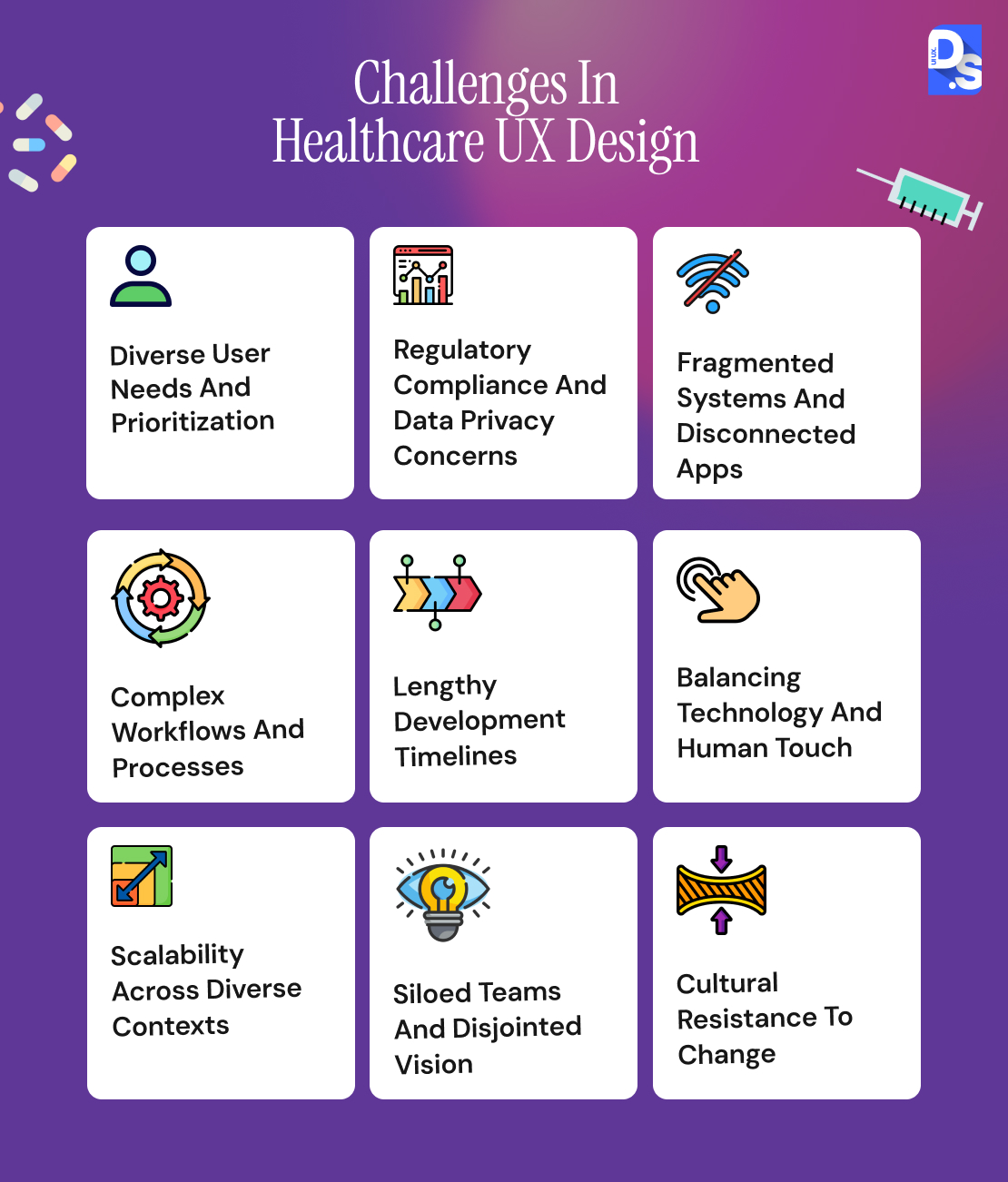
Despite this long list of success stories, healthcare user experience is still a new field rife with challenges like:
i. Diverse User Needs and Prioritization
Healthcare systems must accommodate a wide range of users – patients, clinicians, nurses, and administrators – each with separate sets of needs.
Clinicians require quick access to detailed medical data for efficient decision-making, while patients need simple, intuitive interfaces to manage their health info. Balancing these competing demands is a challenge. Designs optimized for one group may alienate another.
ii. Regulatory Compliance and Data Privacy Concerns
The healthcare sector is subject to strict regulations regarding data privacy. Regulations like HIPAA in the US and GDPR in Europe may create barriers to UX research, testing, and iteration.
For example, mental health apps may be restricted from using real patient data during development/design due to privacy concerns.
iii. Fragmented Systems and Disconnected Apps
Healthcare environments rely on multiple systems – EHRs, lab tools, billing software – often developed by different vendors. These systems often lack seamless integration.
A nurse may need to switch between various platforms to update a single patient’s record. This type of fragmentation results in disjointed workflows that frustrate users.
iv. Complex Workflows and Processes
Healthcare workflows are inherently intricate. Digitizing a task like medication reconciliation may require coordination among doctors, pharmacists, and patients.
Designing solutions that simplify these processes without omitting critical steps poses a big challenge.
A medication management app must effectively pull data from multiple systems while ensuring accuracy and usability without overwhelming the user.
v. Lengthy Development Timelines
Developing healthcare applications is often a time-intensive process due to regulatory requirements and rigorous testing protocols. For instance, launching a telemedicine platform can take years.
During this period, technology and user needs may evolve significantly. This slow pace often clashes with rapid innovation cycles in other industries, making it difficult for healthcare solutions to remain current.
vi. Balancing Technology and Human Touch
Integrating advanced technologies such as AI into healthcare tools can sometimes depersonalize care delivery.
For instance, an AI diagnostic tool that provides results without any empathetic communication may alienate patients. Designers must strike a balance between using technology for efficiency and preserving the human touch that is central to healthcare interactions.
This requires thoughtful design choices that incorporate empathetic language and intuitive interfaces.
vii. Scalability Across Diverse Contexts
Healthcare solutions must function effectively across various settings – from urban hospitals to rural clinics.
A telehealth platform designed for high-bandwidth urban areas may not perform well in regions with limited internet connectivity. Designing for scalability necessitates flexibility and adaptability in designs. This can increase development complexity and costs.
For instance, a mobile health app may need offline functionality to serve users in low-connectivity areas.
viii. Siloed Teams and Disjointed Vision
Healthcare projects often involve multidisciplinary teams – designers, clinicians, IT specialists, and administrators – each with distinct priorities.
A UX team’s vision for a patient-friendly portal might conflict with IT’s focus on stringent security protocols.
Bridging these gaps requires effective communication and collaboration among all team members – a task particularly challenging within hierarchical healthcare environments.
ix. Cultural Resistance to Change
Old-school healthcare institutions are often resistant to change. Transitioning from a top-down caregiver-centric approach to a more inclusive patient-centered and digital model necessitates significant cultural change within organizations.
This process can be slow and tedious.
Steps to Improve Healthcare UX in Your Organization
Want to start improving the UX design of all digital services in your healthcare organization? Go through the following steps.
- Conduct a UX audit to learn about the existing discrepancies in your digital healthcare system’s UX.
- Conduct user research to learn what features or amenities your digital healthcare system’s users want.
- Prototype and test out the UX solutions with your patients and healthcare practitioners.
- Make iterative improvements to the prototype with the feedback.
Finalize the new UX design and start giving your patients and healthcare practitioners the convenience they deserve!
How Healthcare UX Impacts Business Goals
A well-designed healthcare UX directly impacts business goals by fostering increased patient loyalty and retention.
When patients have seamless digital experiences—such as easy appointment booking, clear medical records access, and intuitive navigation—they are more likely to return for future care.
Positive interactions build trust, leading to stronger patient-provider relationships. This, in turn, boosts long-term engagement and reduces churn, ensuring a steady revenue stream for healthcare businesses.
Additionally, an efficient UX minimizes administrative burdens, cutting costs through automation and streamlined workflows. Well-structured interfaces reduce errors and the need for excessive support, improving operational efficiency.
A strong UX also enhances a provider’s reputation as patient-centric, attracting more patients and setting the organization apart in a competitive market. This aligns with broader reasons why UX is important for business across various sectors.
Conclusion
The future of healthcare is digital. It is patient-centric. And, it is something no one in the industry has seen before or can envisage completely.
Designing healthcare products and solutions to meet the new-age, digital-first patients’ true needs is all about stepping into the unknown. For healthcare startups especially, applying proven UX design strategies for startups early on can prevent major usability failures later.
A prerequisite for managing such a “dicey” situation is to embrace the discomfort of not knowing where you are going and being comfortable with experimentation.
Teaming up with UX design professionals who have previously worked in the healthcare space is another great way of managing this situation. That’s where Design Studio UI/UX and our healthcare-focused UI/UX consulting services can help.
Contact us now to learn all about giving your digital healthcare system world-class, patient-centric UX design.
We have helped digitize and modernize many healthcare institutions in the past. We can’t wait to help you too!