


How Color Psychology Impacts Web Design and User Behavior?



Quick Summary
Color psychology in web design explores how different colors such as red, green, or blue can evoke emotions like urgency, calmness, or success. Using the right colors helps communicate the right message and guide users through the experience effectively.
Color psychology affects web design by influencing how users feel about a site before they read anything. The colors on a page create immediate emotional reactions, such as trust, urgency, calm, or excitement. These reactions directly affect whether a user stays, clicks, or leaves.
According to research by the CCICOLOR Institute for Color Research shows that up to 90% of a person’s quick judgment about a brand comes from color alone. This judgment happens within 90 seconds of arriving on the page. In web design, color is not just decoration. It is a form of communication.
Color has always been a powerful communication tool in web design. Web designers use it to convey information, create moods, and influence the user’s psychology of decision-making.
What’s the psychology of decision-making? Well, when making decisions, we form opinions and take actions via mental processes which are influenced by a multitude of internal biases, emotions, and memories.
This interplay of internal factors is called the psychology of decision-making. Color psychology in web design is the study of how different colors affect these internal processes in users and their psychology of decision-making.
It explores how different colors influence the psychological reactions users have as they browse through a website. In this article, we’ll explore the impact of color on web design and the collective psychology of website users.
By understanding the nuanced, psychological underpinnings of colors, web designers can refine the way they choose colors to create even more impactful web designs.
What Is Color Psychology in Web Design?
Color psychology in web design looks at how different colors influence the choices, feelings, and behavior of people visiting a website.
It shows why a red call-to-action feels urgent, why blue seems trustworthy, and why a site with too many conflicting colors can make people uncomfortable before they even know why.
Color is a core aspect of visual perception. It falls under the “sensation and perception” category of psychological science. Color psychology is a subset of psychological studies that focuses on all aspects of color-vision processing in the brain.
Right from how retinal images are processed by cone photoreceptors in the human eye, to the impact different colors have on human behavior, cognition, and actions – all of this falls under the purview of color psychology.
In web design, we focus on the practical application of color psychology, how colors impact human behavior. Color psychology has become a major topic of interest in the design world mainly because of its use in marketing.
In fact, a lot of what we know about color psychology in web design comes from knowledge of how colors are used in branding, advertisements, and other marketing efforts.
85% of consumers mention that they chose a product over others on the basis of colors, which makes color selection one of the vital decisions for branding or web design projects.
How Has Color Psychology Evolved as a Tool in Web Design?
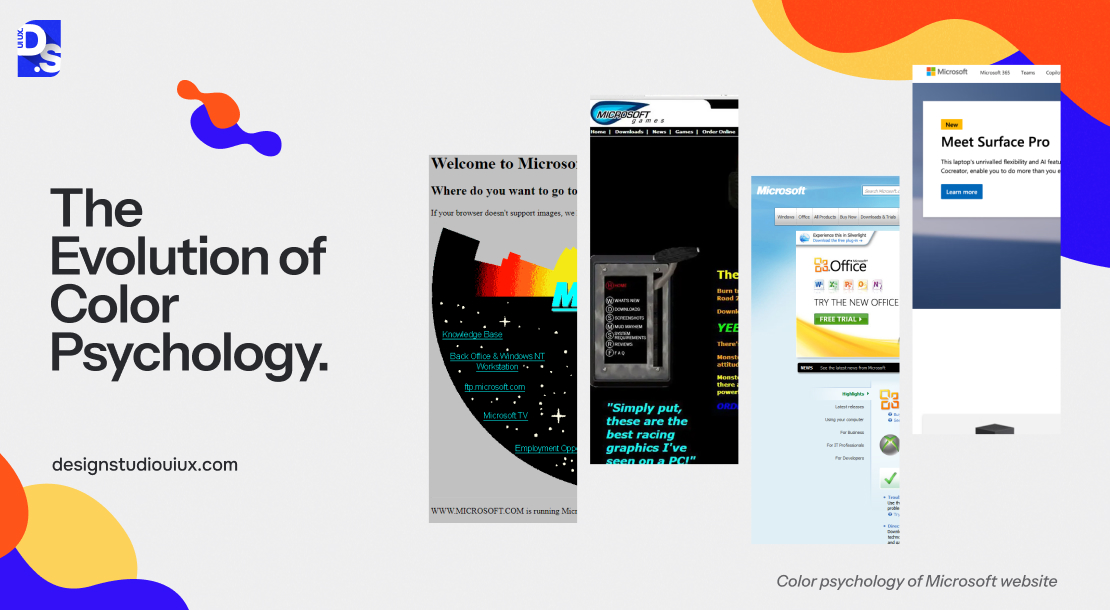
Color psychology is no longer a purely academic field, it has evolved into a digital marketing and web design specialization.
It is not only about selecting the right color, modern design psychologists also ask designers to focus on hue, saturation, and brightness, as these characteristics all influence perception and emotional response.
According to them, these subtle characteristics of colors can influence human perception, as much as the colors themselves. And, are they right? Absolutely. The effect of hue, saturation, and brightness on the human eye – is a complex field of inquiry in itself.
To understand it a bit, we’ll have to take a few notes from some of our fellow species and understand how they have evolved to react to light and colors:
- For most creatures, responding to light is crucial for survival. An amoeba can move toward or away from light by feeling its presence with its entire body.
- Earthworms, a more advanced organism, have light-sensitive receptor cells spread across their bodies. They use it to detect light. Snails have these receptors at the tips of their tentacles.
- These light receptors are also found in scallops, clams, and other nautiluses (members of the phylum Mollusca). These “eye spots” help them sense light from multiple directions and make sense of what direction they are taking.
- However, these light receptors or “eye spots” do not see much detail or color. The ability to focus on details like color likely started with fish, newts, salamanders, frogs, and cuttlefish.
- These animals have lenses that can move back and forth (similar to a camera lens) which allows them to focus on specific things at different distances.
- Over time, more advanced animals like snakes and turtles developed self-focusing lenses, eyelids, and the beginnings of color vision.
- Birds have a highly developed sense of color, while most mammals, except for apes and humans, do not see colors as vividly.
All of these creatures, from amoeba to apes, react to light and color instinctively. They do not have the brains to process colors in the nuanced ways we humans do it. So, how do we react to colors?
How does the complex human brain process different hues, saturation, and brightness levels? It is both instinctive and conditioned.
How Do Humans Respond to Colors?
There are certain instinctive reactions to colors that we all have, just like mammals. These reactions have probably been built into our DNA over millions of years of evolution from apes to humans.
There is also a conditioning aspect to how we react to colors, because of all the extra ‘gray matter’ we have that other mammals do not. Colors have been an important part of all human civilizations and cultures.
The way we perceive colors is hugely impacted by all the cultural conditioning we have been through over these tens of thousands of years of civilization.
Humans react to colors via an overlapping mechanism, a biological response formed through years of evolution, and one that is conditioned by the culture, society, and civilization users grew in.
Shopify in its color psychology guide mentioned that people take only 90 seconds to choose a product, and in 90% of those cases, color plays an influential role, making it an important communication tool for web designers.
For example, in western weddings, white is recognized as a symbol of purity and celebration, whereas, in most Eastern cultures, white is linked to grief and mourning. In Chinese culture, red signifies good fortune; in Western emergency contexts, it signals danger.
These cultural associations are not fixed, they shift over generations as civilizations evolve.
Why is all of this relevant to web design? Because web designers need to understand and navigate all the evolutionary, psychological, and cultural foundations of colors. Since people around the world access these web designs, these should satisfy users across different cultures, not just in one market.
What Is Color Harmony and Why Does It Matter in Web Design?
Color harmony in web design focuses on arranging colors to create a balanced, sorted, and aesthetically-pleasing effect, instead of being chaotic or random.
According to NNG’s psychology and design research, humans always look for order in visual information, and a web designer can quickly communicate order, professionalism, and trust through harmonious color schemes to a first-time user.
Consistent use of harmonious color schemes also helps reinforce the brand’s identity on every webpage. So, how do you establish color harmony in your web design? Simple, you turn to what the experts do which is to use pre-existing color schemes.
These are three core color harmony types used in professional web design:
| Color Scheme | How It Works | Best Used For | Example |
| Analogous | Uses 3 adjacent colors on the color wheel | Creating cohesive, calm, nature-like designs | Yellow + Yellow-green + Green; Blue + Blue-green + Green |
| Complementary | Uses 2 colors opposite each other on the wheel | High contrast; making CTAs and elements pop | Blue + Orange; Yellow + Purple; Red + Green |
| Triadic | Uses 3 colors evenly spaced on the wheel | Vibrant, balanced, visually rich designs | Red + Yellow + Blue; Orange + Green + Violet |
Analogous Color Scheme
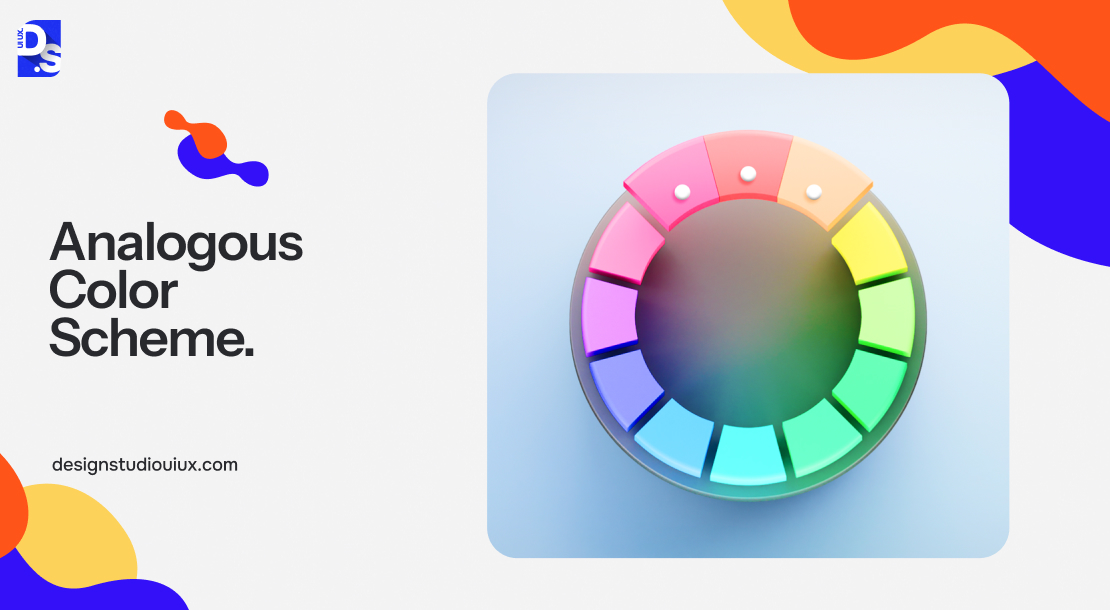
This color scheme focuses on using colors that are close neighbors on the color wheel. Yellow, yellow-green, green or blue, blue-green, and green are examples of analogous color schemes that always help create cohesive designs.
The primary reason behind this is the fact that analogous colors naturally complement each other.
Complementary Colors
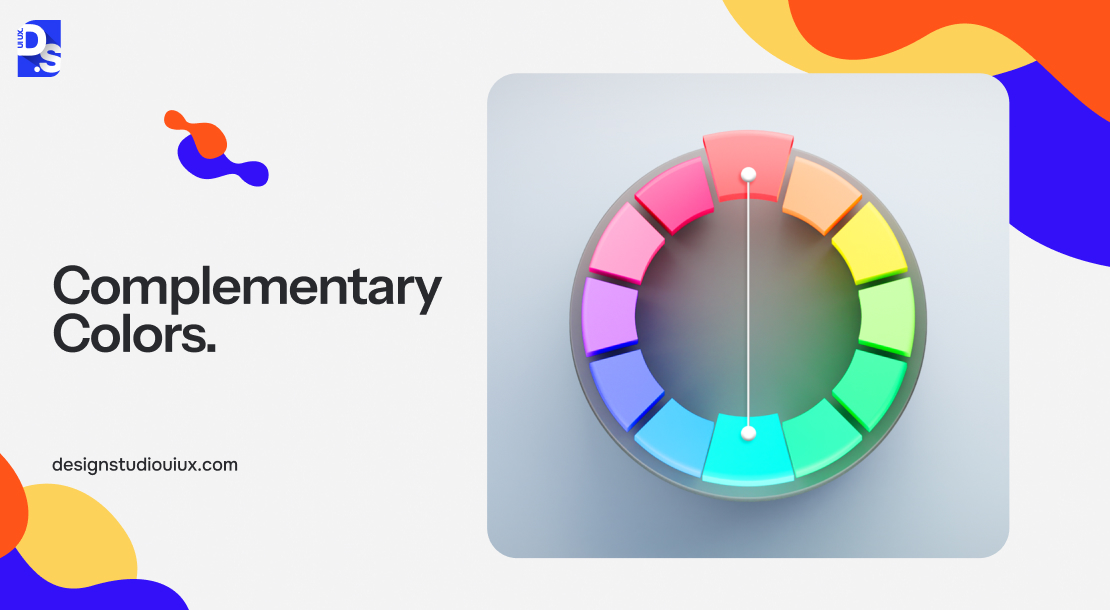
These color schemes feature colors that are at the opposite ends of the color wheel. Since complementary colors make each color stand out and create a strong contrast (e.g., blue and orange or yellow and purple), they are ideal for creating eye-catching webpages or page sections.
Triadic Colors
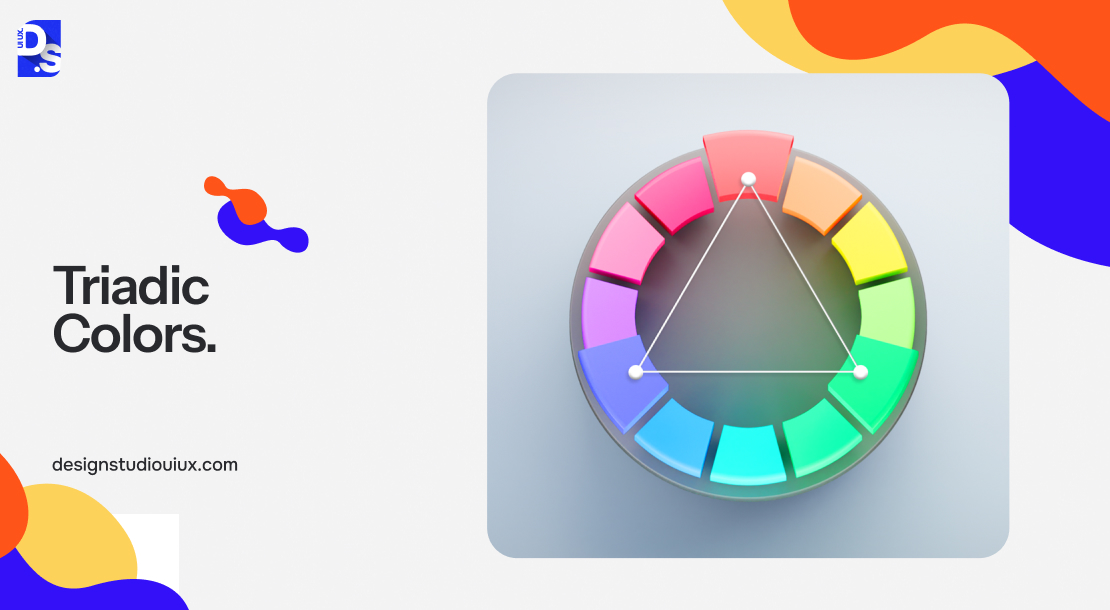
This color scheme features three colors that are evenly spaced out on the color wheel. Pretty specific, right? There are only four triadic color schemes
- Red + Yellow + Blue
- Orange + Green + Violet
- Red-orange + Yellow-green + Blue-violet
- Yellow-orange + Blue-green + Red-violet
By using any of these established color schemes, you can give your website a polished, professional, harmonious, and consistent appearance – qualities that are vital for building trust and familiarity with users.
How Does Cultural Context Affect Color Choices in Web Design?
Cultural context influences color choices in web design by altering the emotional meaning of a color based on where your audience grew up. A color that represents trust in one market might represent danger, grief, or bad luck in another. Users form these associations before reading a single word on your page.
A brand that chooses colors based solely on Western design standards and then launches in East Asian, South Asian, or Middle Eastern markets often misjudges its audience. The farther your product is from its origin market, the more color psychology needs cultural research instead of assumptions.
Since we cannot list every color and every cultural nuance, here is a quick reference table of the most commercially relevant colors in web design, followed by descriptions:
| Color | Global Association | Web Design Use | Cultural Note |
| Red | Urgency, passion, energy, danger | CTA buttons, sale banners, attention-grabbing sections | Signals danger in the West; good fortune in China; avoid for finance and health brands |
| Pink | Femininity, love, playfulness | Beauty, fashion, lifestyle, LGBTQ+ brands | Strongly feminine in the West; associated with youth globally |
| Yellow | Optimism, joy, royalty, attention | Highlighting key information, cheerful brands | Symbol of royalty in the East; optimism ribbon in the West; can feel aggressive at high saturation |
| Black | Elegance, luxury, minimalism | Premium brands, minimalist design, tech companies | Mourning in most cultures; elegance and authority in design contexts |
| Green | Growth, nature, health, calmness | Eco brands, health, finance (growth/money), wellness | Almost universally positive; especially effective for sustainability and health brands |
| Blue | Trust, authority, calmness | Corporate, finance, tech, healthcare websites | World’s most universally liked color; 57% of men and 35% of women prefer blue globally |
| Orange | Enthusiasm, warmth, creativity | CTAs, youth brands, food and entertainment | High energy; works well for click-through but overuse can feel cheap |
| Purple | Luxury, creativity, wisdom | Beauty, spirituality, premium products | Associated with royalty historically; effective for luxury and creative brands |
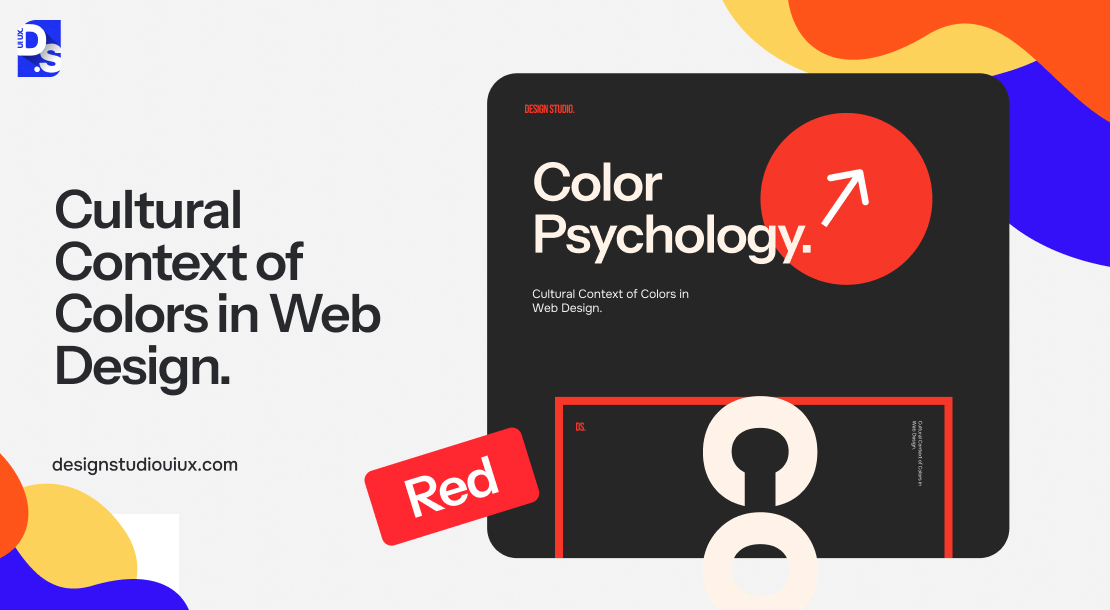
Red: Aggression, passion, violence, romance, and authority – the color red has quite the reputation when it comes to what it represents. This reputation is the same in most cultures. The color’s ability to create urgency, evoke passion, and stimulate action makes it an ideal choice for web page sections that need to catch the eye. Hence, many CTA buttons have either red color-fills or red-colored borders.
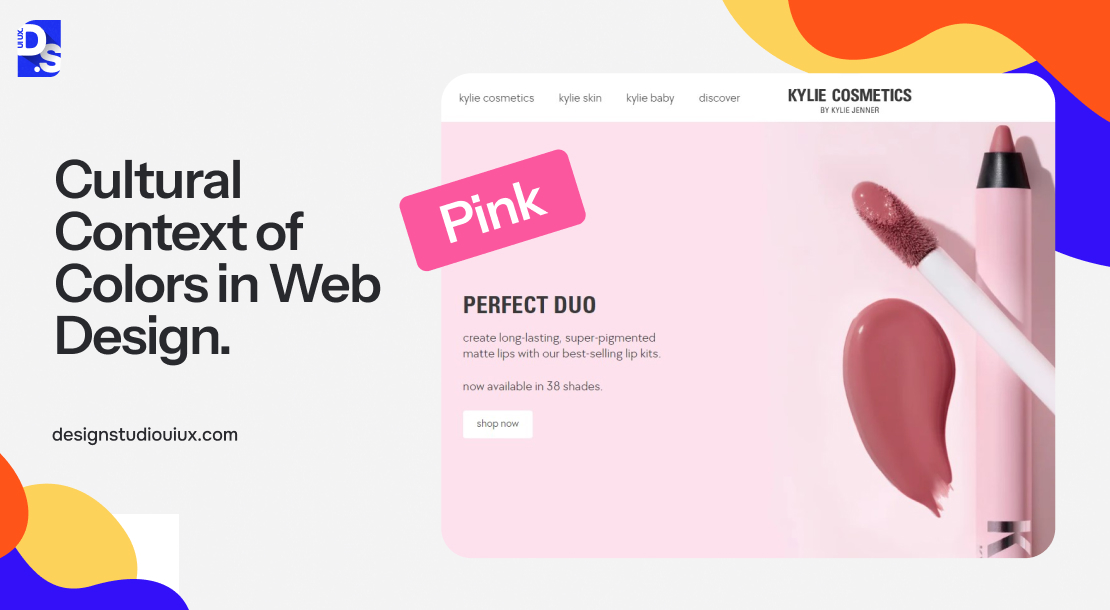
Pink: If red stands for fiery passion, its diluted version stands for soft and gentle love. So, pink is widely associated with femininity, motherhood, and the LGBTQ+ community. If your brand is associated with such feminine qualities, using pink in your web designs will instantly let the world know the values you stand for.
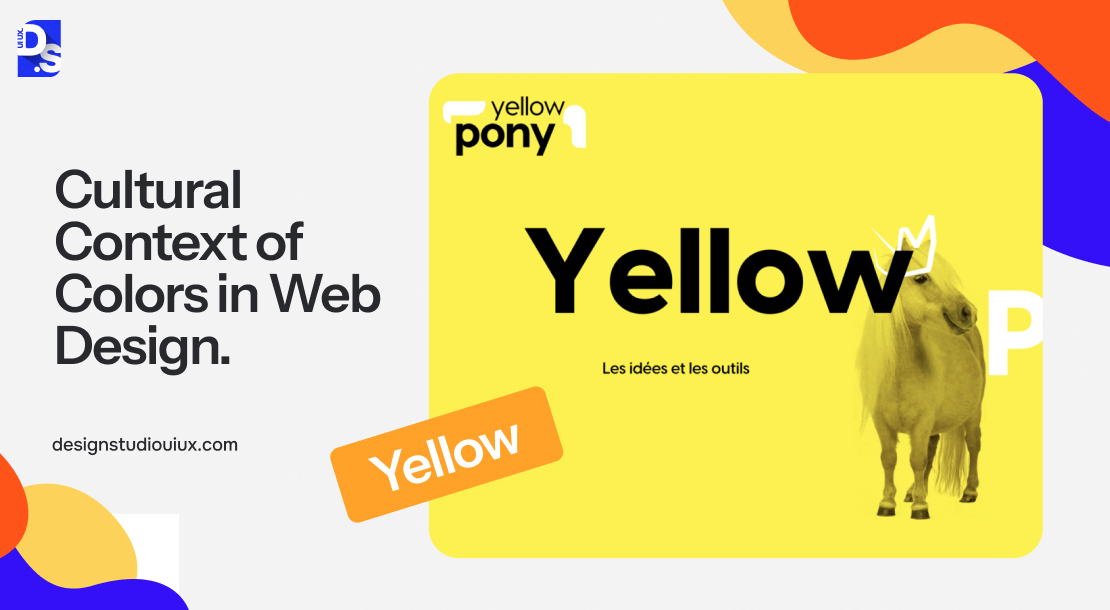
Yellow: Since this color reminds people of sunlight and spring flowers, yellow is widely considered to be a lucky, joyous, and noble color in most parts of the world. For example, in the West, people put up yellow ribbons on their walls as symbols of optimism. In the East, bright yellow has been historically associated with royalty.
Web designers can use yellow whenever they need to evoke optimism and draw attention to important web page elements.
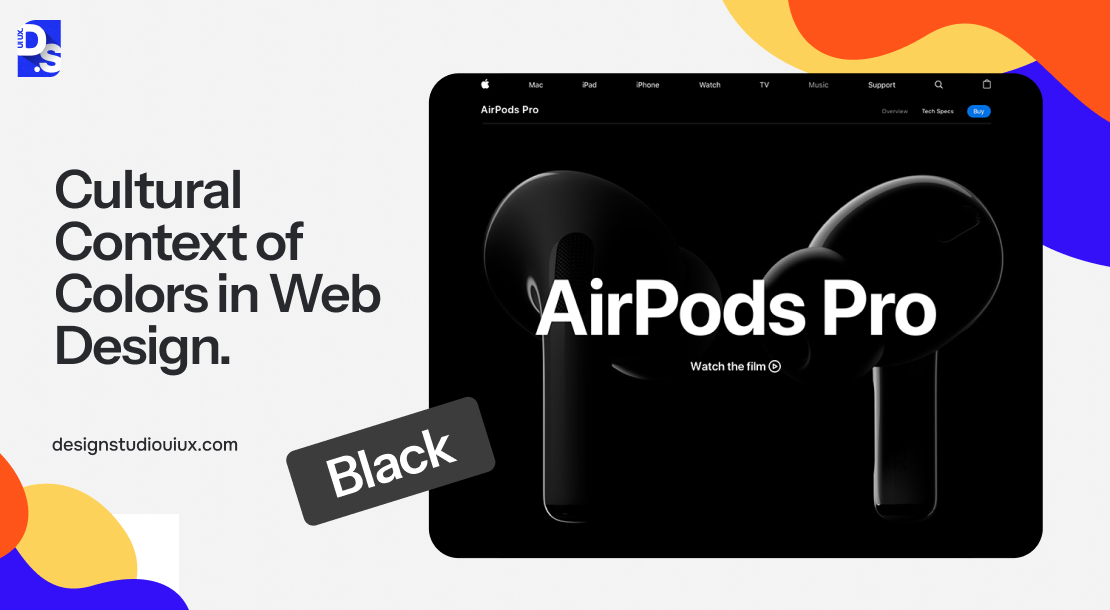
Black: Although black symbolizes death and mourning in most cultures, in design, it is widely accepted as a sleek and elegant color choice. This is especially true in minimalistic web designs.
Even though some people associate black with doom and gloom, its ability to slim down design elements and create a chic neutral backdrop on webpages makes it ideal for minimalist designs.
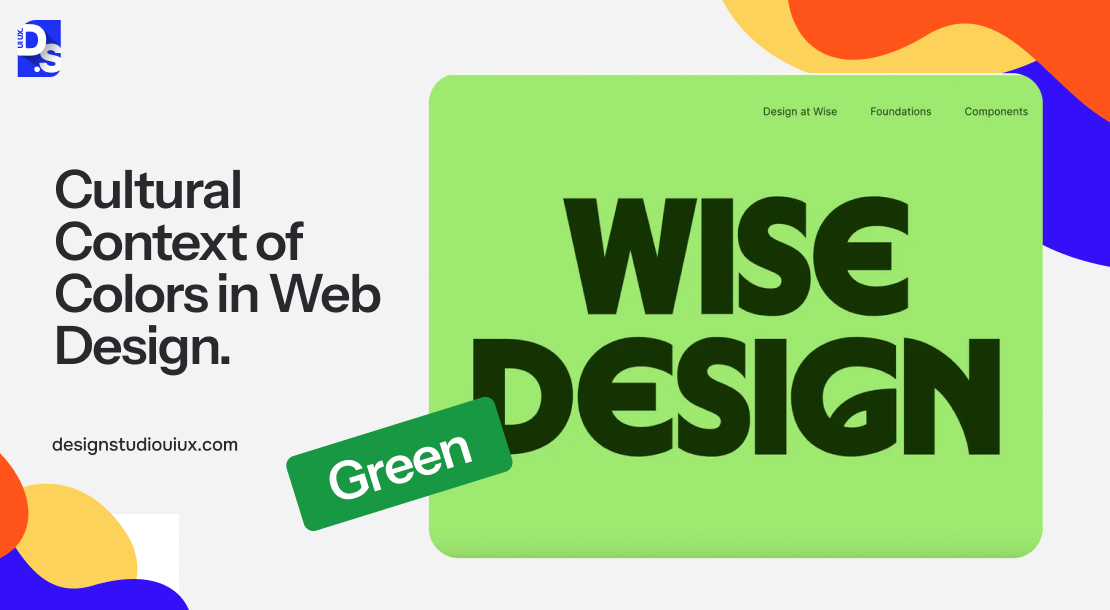
Green: Pretty much everywhere in the world, the color green symbolizes growth. In web design, green is frequently used by brands associated with nature, health, environment, sustainability, and tranquility. It is a great color for conveying a sense of freshness and renewal.
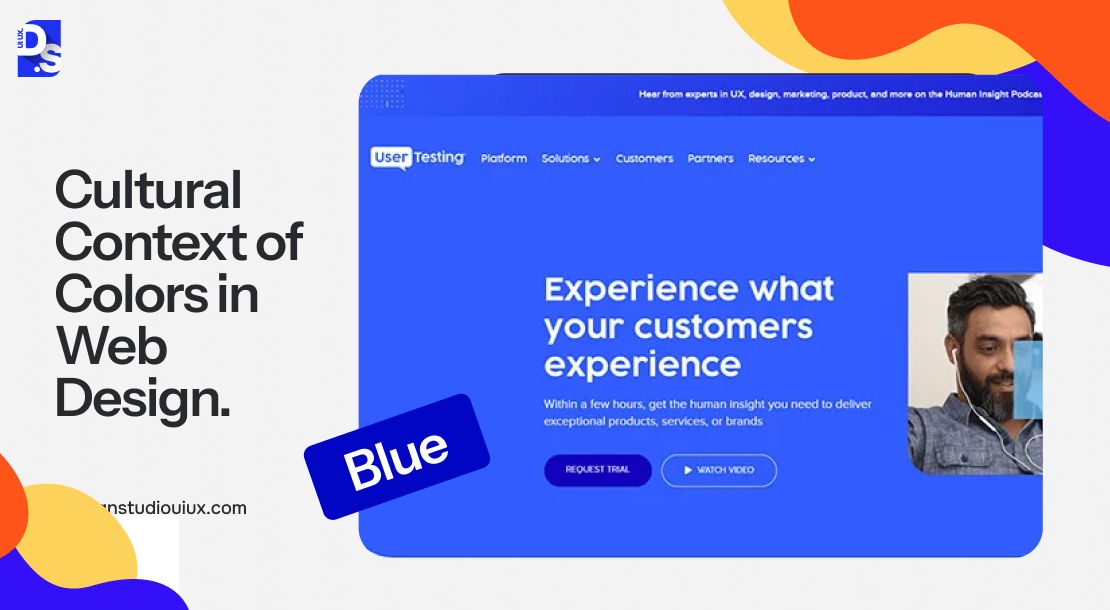
Blue: The color blue symbolizes calmness and authority. That’s why so many countries have blue-colored police officer uniforms. Blue has the same effect on web design. It is a widely popular color that oozes calmness and authority.
A culturally sensitive approach to color selection will help designers choose color combos that give the right connotations to all users in this globalized digital landscape.
Industry-wise Classification of Color Palettes
Color psychology in web design depends on the context of the industry. Users already have some early expectations, so the right color palette can help brands meet those expectations, while the wrong one might lead to serious doubt.
| Industry | Recommended Colors | Why It Works | Examples |
| Healthcare / Medical | Blue, white, green | Trust, cleanliness, calmness, and reduces patient anxiety | Mayo Clinic (blue + white), Headspace (orange + calm blues) |
| Finance / Banking | Blue, dark grey, gold | Authority, stability, reliability, builds financial confidence | JPMorgan (blue), Goldman Sachs (blue + white), Revolut (dark mode) |
| Sustainability / Eco | Green, earthy brown, off-white | Nature, growth, responsibility, confirms eco values instantly | Whole Foods, Patagonia, Beyond Meat |
| Technology / SaaS | Blue, purple, white, dark mode | Innovation, intelligence, depth, signals cutting-edge capability | Stripe (gradient), Figma (purple), Slack (purple + black) |
| Food / Restaurant | Red, orange, yellow, warm tones | Appetite stimulation, these colors are proven to increase hunger | McDonald’s (red + yellow), Pizza Hut (red), Deliveroo (teal + orange) |
| Beauty / Luxury | Black, gold, deep purple, rose | Elegance, exclusivity, aspiration, signals premium quality | Chanel (black + white), Fenty (gold + purple), NARS (black) |
| Education | Blue, green, orange | Trust, growth, enthusiasm, creates approachable authority | Duolingo (green), Coursera (blue), Khan Academy (teal + green) |
How Do You Choose the Right Colors for Your Website?
If you think color psychology will help you narrow down user responses to different individual colors on websites, you’re wrong. Color is too subjective, too dependent on personal experience, and too broad to map cleanly to specific emotions.
What color psychology can do is help web designers strategically think of their color choices and whether they align with the website’s brand and user needs. So, how should web designers think of colors according to color psychologists? Here’s how:
- There are no clear-cut guidelines for choosing a website’s colors.
- Colors only come into play in web design when they can be used to match a brand’s desired personality.
- Without context, choosing one color over another doesn’t make much sense.
The relationship between websites and color hinges on the apparent suitability of the color being used for the specific brand. In simpler terms, does the color ‘fit’ the website – that is the first thing website visitors will think of when they land on a site.
For instance, using cooler colors like blue or green can make your website appear more professional, eco-friendly, and trustworthy. But if the brand behind your website does not stand for these values, the color choices will make no difference in the long run.
Similarly, warmer colors like orange can create a sense of comfort on a website. But if the website is not designed to facilitate smooth user interactions, the initial color-based impression that users have, won’t mean anything after a few minutes.
Studies such as ‘Exciting Red and Competent Blue’ and ‘The Interactive Effects of Colors,’ have confirmed these findings. According to these studies, user intent is affected by colors due to the impact they have on how a website is perceived.
Colors influence how users view the website’s ‘personality.’ If the website’s functionality, aesthetics, and user experience match this perceived personality, you are doing color psychology right.
Combining color psychology with visual design principles can further improve how users engage with website content and interactive elements.
If not, here’s what you need to know:
- Certain colors broadly align with specific emotions. For example, red invokes excitement, green means calm, and brown is associated with ruggedness.
- But that does not mean you should always align with conventional color associations.
- Think of the personality you want to portray to website visitors. Then pick a color combo that matches this personality.
- Just because you sell durable shoes on the Internet, does not mean your website’s main color should be brown.
- So, if your shoe brand’s personality is quirky (and not rugged) you can use red, violet, orange, or any other color scheme. As long as the color scheme matches your website’s vibe – you are good.
- Also, consider the color combos your closest competitors are using. Colors are meant to help your website stand out.
- If all of your competitors are already using the color schemes you want, do not refrain from experimenting with unorthodox color hues and combos.
If you do choose to ‘break the rules’ and pick a color combo that is not typically associated with your website’s niche, test every potential test at least 20 times. Use A/B testing to carefully refine your color choices.
Make sure your final pick reflects your brand’s personality and values in some way. It does not have to be a “green = calm” type of stereotypical reflection. It just needs to match your brand’s personality and the vibe you want to give to website visitors.
Your final pick should somewhat respect your target audience’s cultural connotations of colors. Here are five popular websites rated based on the requirements we just discussed:
| Brands | Color Combination | Reflects Website’s Personality | Target Audience | Different from Competitors | Emotions Evoked |
| Blue and White | Trustworthy, professional | Appeals to professionals and businesses | No. Common in corporate | Conveys calmness, security, and reliability | |
| Coca-Cola | Red and Black | Bold, energetic | Appeals to energetic users | Iconic but used by many of Coke’s competitors | Evokes excitement, urgency, and passion |
| Whole Foods Market | Green and Brown | Nature, sustainability | Appeals to eco-conscious users | Used by most competitors but Whole Foods is the more iconic brand | Conveys warmth, stability, and renewal |
| Fanta | Orange and Gray | Modern, creative | Appeals to younger, creative audiences | Moderately unique | Evokes enthusiasm, creativity, and energy |
| T-Mobile | Purple and Gold | Luxurious, innovative | Appeals to premium customers | Used by some luxury brands but not by T-Mobile’s competitors | Conveys elegance, wealth, and creativity |
Make sure to rate your color choices in the same way before applying them to your web design. Also, review the Web Content Accessibility Guidelines (WCAG) regarding website colors to ensure your choices are compliant.
Use tools likeColor Contrast Checker to streamline this process. This tool will automatically review your design for compliance with all relevant accessibility standards.
How Do Colors Directly Impact Website Conversion Rates?
Color is not limited to aesthetic appeal, it directly influences click-through rates, form completion and purchase rates. CCICOLOR Institute For Color Research identified color to be a dominant contributing factor behind 62-90% purchasing decisions, all made within 90 seconds.
The data also reveals the best case scenarios:
| Color | Conversion Use Case | Effect | Best For |
| Red | CTA buttons, sale banners, countdown timers | Creates urgency; highest click-through in many A/B tests | Flash sales, sign-up CTAs, notifications for required actions |
| Orange | Buy now buttons, pricing CTAs | Warm, approachable; less aggressive than red | Free trials, subscriptions, ecommerce ‘Add to Cart’ |
| Green | Confirmation, success states, eco CTAs | Signals ‘go’, safety, and positive outcome | Form submissions, health apps, sustainability brands |
| Blue | Trust signals, log-in buttons, financial CTAs | Projects authority and calm; builds confidence | Finance, SaaS, healthcare, B2B conversion points |
| Yellow | Highlight elements, promotional badges | Attracts the eye quickly; creates optimism | Promotional labels, sale tags, attention badges |
- CTA color should never be selected based on personal choice, it should be tested against the targeted audience and background
- The difference between CTA color and page background should matter more than the color itself
- A/B tests should be conducted for 20 sessions per variations before jumping to conclusions
- Studies show that red CTAs outperform green versions, and depending on the context and background and context, the reverse can be true too
How Do You Apply Color Psychology Consistently Across Your Website?
Applying color psychology effectively is not just about choosing the right colors, it is about applying them consistently and strategically across every touchpoint of your website so users build the same emotional association at every stage of their journey.
Here are some of the main website touchpoints where you can strategically apply color psychology:
- Follow the 60-30-10 rule: 60% primary color, 30% secondary color, 10% accent color
- Use contrasting colors to make CTAs and links stand out
- Use colors to differentiate visited and unvisited links
- Make use of color to create a visual hierarchy
- Use color to draw attention to important webpage sections
- Leverage white space effectively to create an uncluttered background
- Choose background colors that complement the color scheme
- Only use images and graphics that align with the color scheme
These subtle design decisions will help you maintain harmony in your website. The more you apply them consistently, the more memorable and recognizable your website will become over time.
This will ultimately highlight the importance of web design in creating a brand identity that automatically attracts users and leads them toward conversion.
What Are the Current Website Color Trends in 2026?
Website color trends in 2026 highlights two different styles, bold styles in digital products to grab attention, and a minimalistic aesthetic. Dark mode is a primary design consideration, 82% of visitors prefer dark mode, and 30% of new web design projects are applying a dark-mode first design.
Here are the color trends shaping web design in 2026:
- Bright, saturated colors are the trend of 2024 – a year where so many websites are making bold, brand-defining statements
- Soft, muted, and pastel shades (e.g., beige (#DDD0C8) or dark grey (#323232)) are still uber-popular on minimalistic websites
- Dark Mode, i.e., websites with dark backgrounds but light text are the talk of the town
- Rainbow gradients with dark text (popularized by the likes of Stripe) are in fashion with many tech brands
- Every other year or so, many brands are experiment with futuristic pastels and primary colors
Check out these trends before finalizing your color decisions.
Best Color Psychology Tools For Web Designers in 2026
Designers should not guess the right color combination, instead they must use these tools to apply color psychology with precision:
| Tool | What It Does | Best For | Free? |
| Adobe Color | Generate, explore, and save color palettes; check accessibility | Creating brand palettes and extracting color from images | Free to use |
| Coolors | AI-powered palette generator with hex codes and export options | Fast palette ideation; saw 400%+ usage growth 2024-25 | Free plan available |
| Color Contrast Checker (WebAIM) | Checks foreground/background contrast against WCAG 2.1 standards | Accessibility compliance testing for any color pair | Completely free |
| Colour Blindness Simulator (Coblis) | Shows how your design looks with different types of color blindness | Inclusive design testing before launch | Completely free |
| Color Hunt | Curated, trending color palettes from the design community | Inspiration for current color trends | Completely free |
| Khroma | AI tool that learns your color preferences and generates palettes | Personalized palette discovery; growing fast in 2026 | Free (beta) |
| Figma Color Tokens | Manages color systems and tokens within design workflows | Ensuring design consistency across large teams and products | Included in Figma |
How to A/B Test Your Website Color Choices?
Color theory is the starting point, but A/B testing validates what works and what does not with real users. A simple 5-step color A/B testing process would include:
- Step 1: Identify the element to be tested, a CTA button, hero section background, or navigation bar
- Step 2: Start with two variants, keep everything identical except the color you are testing
- Step 3: Split traffic evenly, expose 50% of visitors to each variant simultaneously
- Step 4: Run the test for sufficient time, either minimum 2 weeks or 500 interactions per variant to reach statistical significance
- Step 5: Measure the metrics, such as click-through rate, form completion, bounce rate, or purchase rate
Common A/B testing pitfalls to avoid:
- Testing too many variables at once, only change a color at a time
- Ending the test too early, premature conclusions are almost always wrong
- Testing the wrong metric will lead to wrong outcomes
- Ignoring seasonal effects, user behavior changes by time of year; run tests in comparable periods
Conclusion
There you have it – an abridged yet all-encompassing explanation of color psychology in web design. Treat this article as an instruction manual and remember to test every color scheme you create.
At Design Studio UI/UX Design Company we use tools likeAdobe Color,Coolors, andColor Hunt to create and test hundreds of color combinations every month. Constant user testing keeps our color senses sharp and in tune with user expectations.
FAQ’s About Color Psychology
How do colors affect user behavior on websites?

Colors directly influence user behavior, emotional responses, and what people think about a brand. Color influences how people perceive a website, trust it to take action (click a button, fill a form, or purchase things). Warm colors, orange and red are used to ensure activity, primarily used in CTAs. Cool colors, blue and green are used to ensure trust and calm, making them the best choice for finance and health brands.
What colors are best for increasing website conversion rates?
There is no formula to determine the best color for conversion, it solely depends on brand context, target audience, and the end goal. Red creates urgency and is widely used for sale CTAs; orange creates enthusiasm and warmth; green is associated with ‘go’ and is effective for sign-up buttons; blue builds trust and works well for financial services. The key principle: use a color for CTAs that contrasts strongly with your background so it stands out.
What is the 60-30-10 color rule in web design?
The 60-30-10 rule is a color composition guideline used by professional web designers to create visual balance. It works as follows: 60% of the design uses the primary color (usually the background or dominant brand color), 30% uses the secondary color (supporting sections, sidebars, headers), and 10% uses the accent color (CTAs, highlights, links, key icons). This distribution creates visual hierarchy and prevents any single color from overwhelming the design. Most well-designed websites, from Apple to Airbnb, intuitively follow this ratio.